Venue opening hours and gaming-area availability are separate, while return figures and online play have important limits.
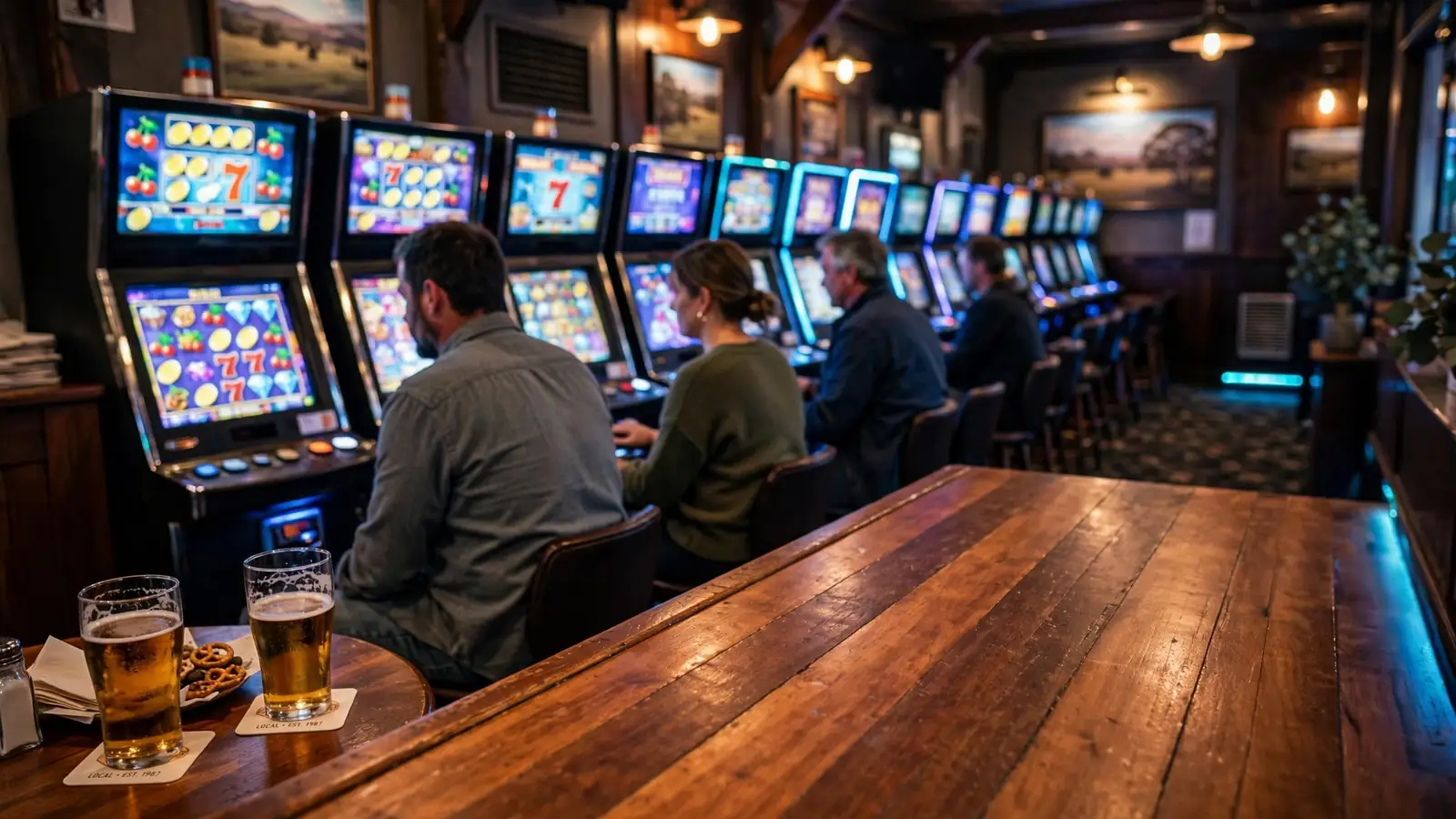
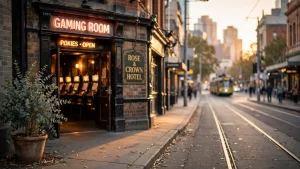
A search for pokies in Tasmania that are open now is a practical availability check, not a question that can be settled by a general description of the state’s gambling rules. Opening status belongs to an individual venue and can change. A venue that operates pokies may not be open at the time of a search; a venue that is open may not have its gaming area available throughout the entire visit.
The relevant information is therefore venue-specific and current. Before travelling, check the venue’s own published information or contact it directly to confirm whether it is open and whether its pokies area is operating. A listing that identifies a venue, or a general statement about gaming in Tasmania, is not confirmation of its status at a particular time.
There are two distinct questions: whether the venue is open, and whether pokies are available to operate when it is open. A restaurant, club or hotel can have hours that differ from those of its gaming area. Public holiday schedules, private functions, maintenance or temporary changes may also affect what is available on a particular day. These are reasons to verify the current position with the venue rather than infer it from a standard weekly schedule.
Choosing pokies in Tasmania means finding an option that suits your preferences and deposit plans. This list offers a starting point, with the details available for each operator to help you assess them.
SpinsUp
SpinsUp is listed under a Curacao Gaming Control Board licence held by Dama N.V. This licensing detail is the key information provided for the operator.
Thor Casino
Thor Casino is licensed through Antillephone N.V. (Versus Odds B.V.) in Curacao and has a minimum deposit of EUR 20.
Wild Tokyo
Wild Tokyo lists a minimum deposit of A$10. Its stated payout times are 30–60 minutes for crypto and 1–5 days for fiat.
Roby Casino
Roby Casino is licensed by Curacao eGaming, with Roby Games Ltd named as the licensee. That licensing information is the available point of note.
Neospin
Neospin is listed under a Curacao Gaming Control Board licence held by Hollycorn N.V. The licence reference is OGL/2023/176/0095.
Uptown Pokies
Uptown Pokies has been operating since 2017 and lists a minimum deposit of A$20. It is licensed in Curacao.
Rollero Casino
Rollero Casino is listed under the Curacao Gaming Control Board licence OGL/2023/176/0095, held by Hollycorn N.V.
7Bit Casino
7Bit Casino is operated by Dama N.V. and is licensed in Curacao. These are the available details to consider when assessing the operator.
Ricky Casino
Ricky Casino lists a minimum deposit of A$20, or A$30 to qualify for the bonus. Its stated payout times are under an hour for crypto and 1–3 business days for PayID.
Kingmaker
Kingmaker lists a minimum deposit of A$30. Its stated payout times are around 90 minutes for crypto and 1–5 days for fiat.
The question can arise at any time of day, including early morning or late evening. A venue’s general opening hours do not, by themselves, establish that pokies are operating at that hour. Nor does a machine-operations rule establish that a particular Tasmanian venue is open. Legal requirements and local availability answer different questions: one concerns obligations when machines operate, the other concerns whether a specific venue is open now.
For a useful check, the confirmation should cover the date and intended arrival time, the venue’s opening status, and whether the gaming area will be accessible then. If the information is dated or refers only to ordinary hours, direct confirmation is the more reliable basis for a journey. A phone call or a current notice from the venue can resolve details that a general directory entry may leave unclear.
Search results and directory listings can help identify possible venues, but they should not be treated as a live operating record unless they clearly show current information from the venue. Even an “open” label may refer to the broader premises rather than the gaming area. The difference matters when the purpose of the trip is specifically to play pokies: an open café or club does not necessarily mean its machines are available.
 Pokies in Adelaide: What Information Is VerifiedLearn what venue opening details, payout claims and online pokies information can—and cannot—confirm, including why no verified 24-hour list is available.
 Best Pokies in Geelong: What the Evidence ShowsCompare what is verified about Geelong venues, opening hours and locations, and why RTP is a theoretical measure over extensive play—not a…
The same caution applies to searches for a particular brand or a named casino. A name in a search result is not proof that a Tasmanian venue of that name exists, is operating, or offers pokies at the time in question. Availability should be confirmed against the venue itself, not inferred from a familiar brand, an old listing or an unverified mention.
A sensible check is narrow rather than elaborate: identify the venue, confirm its current opening hours, and ask whether the gaming area is operating during the planned visit. If the venue cannot confirm that detail, the status remains uncertain. That is a practical limit, not a reason to substitute another venue’s schedule or assume that all pokies venues follow the same hours.
Availability is only one part of a planned visit. Deposit limits, loss limits and session time limits are standard responsible-gambling tools, as is self-exclusion. These controls concern how gambling is managed; they do not confirm that a venue is open or that its machines are operating. Keeping the two questions separate avoids treating a safety measure as a source of live venue information.
The useful outcome of an opening check is a confirmed venue and time, not a statewide assumption. Current details should come directly from the premises, especially when a trip depends on access to the gaming area rather than the venue generally. Rules about the hours during which machines may operate are a separate matter from whether any particular Tasmanian venue is open at the time of a visit.
A return-to-player figure is a theoretical measure of how much a pokie is designed to return across play over time. It is not a forecast of what a particular session will pay, and it does not identify a machine that will produce a win. For comparisons between pokies, the figure is useful only when it is tied to the precise game version and return setting being offered.
A specialist review reports that some game providers let casinos choose between different RTP settings for the same pokie. If that applies, the title alone is not enough to establish its return percentage: the same game could be configured differently at different casinos. A figure attached to a game in one setting should therefore not automatically be treated as the figure for that game everywhere.
This distinction matters when comparing Tasmania casino pokies or assessing claims about the best-paying options. A comparison needs like-for-like information: the exact game and the RTP setting in force at the venue. Without that pairing, two figures may refer to different configurations, or a figure may describe a version that is not the one being considered. A name or a promotional description cannot fill that gap.
Even a correctly matched RTP figure has a limited job. It describes a theoretical return across many plays, rather than setting a minimum return for an individual player or session. It does not say when a payout will occur, how large a particular win will be, or whether a session will finish ahead. A higher stated return is not a promise that the next spin, or the next sequence of spins, will pay more.
That limit follows from how a pokie produces results. Its Random Number Generator determines each spin separately, so an earlier result does not set up a later one. A run of losses does not establish that a win is due; a recent win does not establish that another is likely. RTP and spin outcomes describe different things: one is a theoretical measure across play, while the other is the result of an individual random event.
For someone comparing pokies in Tasmania, this means that a ranking based only on a title or a headline return figure would be incomplete. The figure must belong to the exact configuration in question, and it still cannot predict a session. No title can be called the best option solely because its name is familiar or its stated percentage appears favourable. The relevant comparison is conditional, not a guarantee.
The same caution applies to descriptions such as “best pokies in Tasmania” or “best paying pokies”. Those labels can imply a settled order, but a defensible comparison would require comparable RTP information for the specific games and settings under review. It would also need to avoid treating theoretical return as an individual outcome. Without those distinctions, a ranked list can look precise while answering neither question clearly: what setting is installed, and what can be expected from one session?
Attention: A return-to-player (RTP) figure is a theoretical measure over time and does not forecast the outcome of an individual session or a specific win.
A return figure also cannot establish that a particular pokie is available at a Tasmanian venue. Availability and configuration are separate questions. A game may have an RTP setting in one casino and a different setting in another; the existence of a game or setting in a general reference does not confirm its presence at a local venue. The same applies to searches for pokies in a CBD or city location: a theoretical percentage does not identify a machine, a venue, or its current configuration.
The practical reading is narrow. Treat RTP as a comparison measure only when it is attached to the exact game version and setting; treat every spin as its own random result. That leaves the figure useful for describing long-run design, but not for predicting a win, identifying a due payout, or establishing which pokie is best for a session.
“Near the airport” and “near the CBD” are not precise location descriptions. Each needs a named destination and a clearly identified venue before a distance or route can be assessed. Without those two points, a claim that a pokie venue is close to an airport, central business district or another part of Tasmania has no measurable basis.
Tasmania-wide wording does not narrow the search to a particular place. A reference to northern Tasmania, for instance, identifies a broad area rather than a specific address. Likewise, “the airport” does not identify a particular terminal or arrival point, and “the CBD” does not specify which central district is intended. The labels may sound useful, but they cannot support a practical journey comparison on their own.
A defensible proximity comparison would need to identify the venue and the relevant destination, then state how the distance was measured. Straight-line distance and road distance are different measures; neither, by itself, gives a complete account of the time or effort involved in a trip. Without a defined route and endpoints, claims such as “nearby” or “a short drive away” are impressions rather than usable travel information.
The same limitation applies to searches for pokies close to a Tasmanian airport or in a central district. A place name in a search phrase does not establish that a venue is located there. Nor does it establish a connection between a venue and an airport, hotel, transport stop or other landmark. Those details require a specific location, not an inference from broad wording.
For a reader comparing possible destinations, the practical distinction is between a geographic label and a route that can be checked. A meaningful comparison would name the starting point and destination, give a distance using a stated method, and make clear whether the figure refers to walking or driving. If those elements are absent, one option cannot be called closer than another on a sound basis.
Claims like "nearby" or "a short drive away" are impressions; a reliable comparison requires a named destination, a defined route, and a specific distance measurement.
The same standard applies to claims about venues near a CBD. “Central” can describe a wide area, and its meaning changes with the city or town being discussed. A venue might be described as central in general terms without that description establishing its distance from a particular address or transport point. A location claim needs enough detail to be tested, not merely a familiar label.
As a result, no nearby airport or CBD option can be identified from broad regional wording alone. A reliable location comparison depends on named places and a defined route; without those, proximity remains unmeasured.
A venue’s obligations can depend on how many pokies it operates. A report by regionriverina.com.au describes a requirement for venues with more than 20 gaming machines to have a dedicated responsible gambling officer (RGO) on duty whenever those machines are operating. The threshold concerns the number of machines at a venue; it is not a rating of the games or an indication that one venue offers better play than another.
The RGO requirement links staffing to machine operation. Under the reported rule, the officer must be on duty during operating periods for the machines, rather than merely being attached to the venue in name. That makes the obligation relevant to how a larger venue manages its floor while pokies are running. It does not, by itself, establish the operating hours of any particular venue.
The same report describes a requirement for venues to keep a gambling incident register. The register is intended to record relevant occurrences, including situations where a patron’s behaviour indicates possible gambling harm. It is a record of incidents, not a public league table or a measure of how often a venue’s machines pay out.
Taken together, the requirements concern oversight and record-keeping. One assigns an on-duty role at venues above the machine threshold; the other provides a formal place to document occurrences that may point to gambling harm. Neither provides a basis for ranking pokies venues in Tasmania or identifying a “best” venue. Those are separate questions from whether an operator has staffing and reporting duties.
The distinction matters because a venue’s machine count does not determine the return settings of a particular pokie, and an incident register does not show a game’s likely result. These measures describe responsibilities around operating a venue, not the financial performance of its machines. They also do not establish that every Tasmanian venue meets the threshold: the requirement described in the report applies only where the machine count is above it.
For anyone comparing venues, these rules are best understood as operating standards rather than recommendations. The officer requirement is tied to the period when the machines are running, while the register requirement concerns recording specified incidents. A venue’s compliance with either obligation would not, on its own, establish that its games are preferable, that it has a particular mix of pokies, or that a visit will produce a favourable result. Those conclusions cannot be calculated from staffing and incident-record rules.
The legal distinction is between a physical venue and a real-money online service. Under the Interactive Gambling Act 2001, a company cannot lawfully offer real-money online pokies to people in Australia without a domestic licence. No Australian licences for online casinos have been issued, and there is no Australian-licensed online casino. A website’s location, branding or description does not alter that position.
That matters when considering searches for pokies aboard the Spirit of Tasmania or for a Crown-branded casino in Tasmania. A vessel name or casino brand is not, by itself, evidence that real-money online play is authorised. The online rule applies to the service being offered to people in Australia; attaching a familiar name to a website does not create a domestic licence or an exception to the law.
The same test applies to offers described as online pokies in Tasmania for real money. The key issue is not whether a page uses Tasmanian wording, displays a local-looking identity or claims to serve Australian customers. The relevant legal point is that no company has been issued the domestic online-casino licence required to offer that service lawfully to Australian residents. A label is packaging; it does not supply the missing authorisation.
A no-deposit bonus claim does not change the analysis. Whether an offer asks for an initial payment or advertises play without one, the promotional wording cannot make an unlicensed real-money online pokie service lawful. Nor does a bonus headline establish that a service is Australian-licensed. The legal status turns on the nature of the service and the domestic licensing position, not on the amount or presentation of an offer.
This is separate from whether a particular ship or physical venue has gaming facilities. Online access and on-site machines are different arrangements, and the rules for an online service should not be used to infer what is available aboard a vessel or inside a casino. Conversely, a venue’s name does not establish that it may provide real-money online pokies to people in Australia.
For a Tasmanian search, the practical conclusion is narrow: a real-money online offer cannot be treated as lawful merely because it refers to Tasmania, the Spirit of Tasmania or a Crown-branded venue. The Interactive Gambling Act 2001 requires a domestic licence for companies providing the service, and no Australian online-casino licences have been issued. A promotional phrase cannot substitute for that licence.
A report by regionriverina.com.au describes an operating-condition rule for larger venues: from 1 July, a venue with more than 20 gaming machines is required to have a dedicated responsible gambling officer (RGO) present for the period those machines are running. The trigger is machine operation, not simply whether the venue’s doors are open.
That distinction matters when considering claims about late-night or round-the-clock pokies. The requirement does not set a venue’s opening hours, say when machines must stop operating, or establish that any Tasmanian venue runs machines continuously. It specifies who must be on duty if a venue above the stated machine threshold operates its machines. A staffing condition is not an hours-of-trade schedule.
The requirement for a responsible gambling officer applies specifically to venues exceeding the 20-machine threshold and is tied to the periods when those machines are running, not necessarily every hour the premises are open.
The rule also has a defined scope. It applies to venues exceeding the threshold, rather than establishing an RGO requirement for every venue regardless of machine numbers. The stated duty is tied to the machines being in operation; it is not described as a general requirement for an officer to remain on site whenever the premises are open. Treating those conditions as interchangeable would produce a broader claim than the report supports.
For someone assessing the relationship between operating hours and oversight, the practical reading is narrow: where the reported requirement applies, the venue’s machine-operating period must be covered by an on-duty RGO. If machines are not operating, the condition described does not itself specify that the officer must be present. No particular start time, closing time, overnight schedule or maximum operating period is supplied by this rule.
The threshold is a count of gaming machines, not a measure of how busy a venue is or how long it operates. A venue’s size in this respect determines whether the described staffing condition is relevant; the duration of operation determines when the officer must be on duty. Neither part of that calculation reveals the actual timetable of a Tasmanian venue.
Accordingly, the reported requirement can explain how oversight is linked to machine operation, but it cannot support a list of venues open late or a claim that pokies are available around the clock in Tasmania. Those are separate questions from the staffing condition. The available point is specific: for venues above the stated threshold, an RGO must be on duty while the machines operate, under the requirement described in the report.
A run of wins, a long stretch without a win, or a sequence of near misses does not provide a dependable forecast for the next spin. A pokie uses a Random Number Generator (RNG) to produce outcomes, with each spin treated as a separate random event. The result of an earlier spin does not set up, delay or improve the result of the next one.
That distinction matters when comparing experiences at pokies in Tasmania. A short session can look patterned because people naturally group results into streaks: several wins in succession appear significant, while losses may seem to be building towards a win. Neither interpretation changes the mechanism. The next outcome is not a repayment for earlier losses, and a recent win does not make another win more likely.
A record of past results can describe what has already happened. It cannot turn random outcomes into a reliable system for choosing when to play, when to raise a stake or when a win is due. A strategy based on waiting for a particular sequence therefore has no sound predictive basis. The arithmetic is simple: the past is a record, not an input that directs the next result.
Because pokies use a Random Number Generator (RNG), each spin is a separate event; past results—whether wins or losses—do not influence or predict future outcomes.
This also limits what can be concluded from a few sessions at a game described as one of the best pokies in Tasmania. A favourable personal run does not establish that the game will repeat those results. An unfavourable run does not show that a reversal is approaching. Neither a streak nor its absence proves a dependable pattern.
The same reasoning applies to bets and payouts. Observing a particular outcome does not establish what the next spin will return, and a previous payout does not promise another. A player’s sequence of results cannot, by itself, show what the maximum bet or cash payout is for a particular machine. Those are separate terms, not conclusions that can be extracted from recent spins.
The useful distinction is between description and prediction. Results can be counted after they occur; they cannot be used to calculate a guaranteed next outcome. Any method that claims to identify a due spin from a past sequence treats randomness as if it kept a balance. It does not. A session may end with a gain or a loss, but the sequence leading there offers no reliable pattern for the next spin.
The legal position separates the operator’s conduct from the player’s. Under Australia’s framework, providing real-money online pokies to people in Australia is prohibited for operators without a domestic licence. No Australian online casino licence has been issued. That prohibition does not make an individual player liable simply for using an offshore site: Australians may play on offshore sites that accept them, and the law targets the businesses providing the service.
That distinction matters when considering online pokies from Tasmania. A site may accept a deposit and display games, but access does not establish that its service is lawful in Australia, nor does it create a local route for resolving a dispute. The operator’s willingness to take a customer is not the same thing as protection for that customer.
The principal financial exposure is non-payment. If an offshore casino withholds winnings, an Australian player has no legal recourse in Australia to compel payment. A balance shown on screen therefore cannot be treated as money that is recoverable through Australian proceedings. The risk is not limited to whether a game appears to pay; it concerns whether the operator will release a withdrawal and whether any effective local remedy exists if it does not.
This makes claims about the best-paying pokies in Tasmania a poor substitute for assessing the transaction itself. A displayed win has no settled value until it can be withdrawn. Where the operator is offshore, the amount credited to an account and the amount ultimately received may be separated by a dispute for which Australian legal recourse is unavailable. A high limit does not change that exposure; it increases the amount potentially at stake, not the strength of a claim.
BetStop also has a defined boundary: it applies to Australian-licensed operators and does not bind offshore sites. It should not be treated as a control that will prevent access to, or activity with, an offshore casino. Its limits follow from the same distinction between domestic oversight and an operator outside that system.
Legal Recourse
Australian players have no legal recourse in Australia to compel payment if an offshore casino withholds winnings, as these operators lack a domestic licence.
Before any withdrawal, identity and address documents should be verified in line with the operator’s requirements. That is an administrative step, not a guarantee of payment or a substitute for an Australian remedy. If a payout is refused, the central problem remains the same whether the site was found while looking for pokies near Tasmania Central or elsewhere: Australian players cannot use Australian legal proceedings to compel an offshore casino to pay winnings.
Clubs are one part of the Tasmanian pokies landscape, but a general description of club gambling does not identify which premises have machines or what each venue offers. A CBD label is not enough to establish that a particular club has pokies.
The same distinction applies to the phrase “best pokies” in a city-centre context. It can refer to the machines in a venue, the venue’s location, or its facilities; those are separate questions.
There is one relevant operational update. A report published by regionriverina.com.au described a one-month grace period for venues to remove signage and introduce responsible gambling officers. That is a transition period attached to those changes, not a directory of clubs and not evidence that every CBD venue has the same arrangements. Signage and the presence of an officer are operational matters; neither establishes which pokies a club offers.
Self-exclusion is a separate consideration from choosing a venue. Deposit limits, loss limits, session-time limits and self-exclusion are recognised responsible-gambling tools. BetStop applies to Australian-licensed operators and does not bind offshore sites; it should not be taken as a venue directory or as a statement about the machines available at a Tasmanian club.
For a club-based choice, the useful unit of comparison is the individual venue, not the broad category “CBD club”. Details such as whether pokies are offered, the relevant arrangements and any access conditions need to be confirmed with that premises. General claims about Tasmanian clubs cannot substitute for venue-level confirmation, and a city-centre description alone cannot support a recommendation.
PayID is a bank-transfer facility, not a setting built into a pokie. It uses the New Payments Platform (NPP) to route a transfer through an identifier such as an email address, mobile number or Australian Business Number. That describes how money moves between bank accounts; it does not show whether a Tasmanian venue accepts cashless payments at its machines.
The distinction matters because a payment method and a machine’s payment options are separate things. A venue could not be identified as offering cashless pokies merely because PayID exists or is available through a bank. Nor does PayID establish that a machine can accept a bank transfer, that a venue supports a particular payment arrangement, or that a machine is cashless.
For online transactions, PayID must first be linked to a bank account. That requirement describes the transfer mechanism, not an endorsement of real-money online pokies: Australian law prohibits operators from providing those services to people in Australia, and no Australian-licensed online casino exists. PayID’s presence does not change that legal position.
The same limit applies to location-based searches, including requests for cashless pokies in Tasmania or venues described as being in Newcastle, Tasmania. PayID cannot identify a nearby venue or confirm its machine features. Those are venue-level details, not properties of the payment network.
In practical terms, PayID answers a narrow question: which bank-linked alias can be used to direct a transfer through the NPP? It does not answer whether a pokie accepts cashless payment, whether any Tasmanian venue offers that option, or where such a venue might be. A bank-transfer alias is not a machine specification.
Yes, Australians can legally play on offshore sites that accept them, but companies cannot legally offer real-money online pokies to Australian residents without a domestic licence, and no such licences have been issued. There is no Australian-licensed online casino, and players have no legal recourse in Australia if an offshore casino refuses to pay.
You must be at least 18 to gamble online in Australia.
It is the amount you must bet, expressed as a multiple of the bonus or sometimes the deposit plus bonus, before you can withdraw winnings. For example, a $500 bonus with a 40x requirement means $20,000 in bets must be placed first.