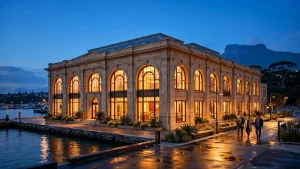
A guide to distinguishing casino connections from nearby stays and assessing searches about amenities, dining and events.

A casino hotel and a hotel near a casino are different propositions. The first implies accommodation operated as part of, or directly connected with, a casino venue. The second describes location only: a property may be nearby without being owned, managed or serviced by the casino. That distinction matters when assessing room descriptions, booking terms and any claim that a stay is a casino hotel deal.
The name Crown Casino is associated with Victoria’s land-based gambling market, but that does not establish a hotel name, room category or accommodation package. A property’s connection to a casino needs to be stated clearly in the booking information. Similar wording in a listing or headline is not enough to establish that the hotel is on site, that access is included, or that the casino operates the accommodation.
Room searches also require more than a headline. A room category, its included features and the conditions attached to the rate are separate details. Without those particulars, a description such as “casino hotel rooms” does not establish what a guest would receive. The same applies to photographs and promotional wording: they may describe a property, but do not by themselves confirm the terms of a particular booking.
Choosing an online casino for Victoria in 2026 means checking the available details before deciding where to play. This list provides a concise reference to the information supplied for each operator.
SpinsUp
SpinsUp is listed under a Curacao Gaming Control Board licence, OGL/2023/174/0082, held by Dama N.V.
Thor Casino
Thor Casino is licensed in Curacao through Antillephone N.V. (Versus Odds B.V.). Its minimum deposit is EUR 20.
Wild Tokyo
Wild Tokyo lists a A$10 minimum deposit. Its stated payout times are 30–60 minutes for crypto and 1–5 days for fiat.
Roby Casino
Roby Casino is associated with a Curacao eGaming licence held by Roby Games Ltd.
Neospin
Neospin is listed under Curacao Gaming Control Board licence OGL/2023/176/0095, held by Hollycorn N.V.
Uptown Pokies
Uptown Pokies has been operating since 2017 and is listed as Curacao-licensed. Its minimum deposit is A$20.
Rollero Casino
Rollero Casino is listed under Curacao Gaming Control Board licence OGL/2023/176/0095, held by Hollycorn N.V.
7Bit Casino
7Bit Casino is listed as Curacao-licensed and operated by Dama N.V.
Ricky Casino
Ricky Casino lists a A$20 minimum deposit, or A$30 to qualify for the bonus. Payout times are under an hour for crypto and 1–3 business days for PayID.
Kingmaker
Kingmaker lists a A$30 minimum deposit. Its stated payout times are about 90 minutes for crypto and 1–5 days for fiat.
A claimed deal is a price offer only when its conditions and final cost can be assessed. A low headline rate, if one is displayed, cannot be evaluated without knowing what it covers and whether additional charges or booking conditions apply. That is not a reason to assume an offer exists or that a promotion applies to every room; the commercial terms need to be explicit.
The word “Victoria” can also refer to the state rather than a particular venue. A request for a casino hotel in Victoria therefore does not, on its own, identify a property or establish that accommodation is attached to a casino. Search results may mix venue names, nearby lodging and general travel listings. Those categories should not be collapsed into a single product: proximity is not proof of an on-site hotel, and a hotel listing is not proof of a casino-operated stay.
For a useful comparison, the booking information would need to identify the property and explain the relationship, if any, between the accommodation and the casino. It would also need to set out the room description, the rate’s inclusions and the conditions that determine the amount payable. If those elements are not stated, there is no sound basis for comparing one supposed casino hotel offer with another. A convenient label does not complete the calculation.
Hours are a separate operational detail, not a hotel feature. A casino’s operating schedule would not establish when a hotel checks guests in or out, while a hotel’s reception arrangements would not establish casino hours. These are different services with different operating terms. A combined venue name does not make their schedules interchangeable, and one should not be inferred from the other.
The practical distinction is straightforward: an on-site hotel claim requires a confirmed property and a clear connection to the casino; a room claim requires a defined room and booking terms; a deal requires enough price information to calculate the final cost. Without those elements, “casino hotel” remains a broad description rather than a confirmed stay. Hotel searches can be assessed on those terms without treating a nearby address, promotional phrase or venue association as evidence of accommodation.
Poker-related terms can refer to different activities. A poker machine is an electronic gambling machine; poker played at a table involves cards and players. A figure for poker machines therefore says nothing about the availability of a poker room, a cash game or a tournament. Those categories should not be treated as interchangeable when assessing Crown Casino or any other Victorian venue.
A specialist review reports that Crown Casino has more than 3,500 poker machines. That is a machine count attributed to that type of source, not evidence of a particular poker-room layout or of scheduled tournaments. It also describes one operator, rather than establishing a statewide figure. For anyone comparing poker options, the distinction matters: a large number of machines does not answer whether live card poker is offered, what format it might use, or whether an event is running.
A specialist review reports that Crown Casino has more than 3,500 poker machines, though this count does not confirm the availability of live card poker or scheduled tournaments.
Tournament information is time-sensitive in a way that a general machine count is not. A tournament has its own entry conditions, schedule and format; a room name alone would not establish any of those terms. No event should be assumed from the words “poker room” or “poker tournament” appearing in a venue description. An advertised date or participation condition would need to be checked against current venue information before it could support a decision.
There is also a separate legal line between land-based play and online casino poker. Under the Interactive Gambling Act 2001, online casino-style games, including poker, cannot be offered to Australian customers. This restriction concerns the provision of the service; it does not turn a reference to a physical casino into proof that an online poker service is lawful. A poker site’s overseas location or use of a poker label does not change the Australian rule.
The distinction applies even when online poker is described as a tournament rather than a cash game. The format does not remove it from the category of online casino-style poker covered by the Act. Searches for online tables or remote events should therefore not be confused with information about poker-machine play at a physical casino. Nor does the existence of poker machines establish that a venue hosts live poker tournaments.
The same care applies to expressions such as “casino rooms” and “sports bar”. In a casino context, “rooms” may refer to accommodation, a gaming area or a private event space; it does not, by itself, identify a poker room. Likewise, a sports bar is a distinct venue feature, not evidence of poker facilities. These labels do not establish a tournament calendar, table availability or opening status.
For a practical comparison, the relevant questions are separate: whether the information concerns poker machines or live card poker; whether a tournament is explicitly identified; and whether the activity is on-site rather than online. The available machine-count report answers only the first kind of question, and only for Crown Casino. Online poker offered to Australian customers falls on the other side of the legal boundary, regardless of whether it is presented as a tournament, room or general casino game.
A breakfast buffet, a general buffet and a resort stay are separate propositions, not interchangeable labels for a casino. A venue could have one without the others; the word “resort” does not establish that meals or accommodation are part of a package. None of these descriptions should be treated as a confirmed Victoria casino offering without current, venue-specific terms.
The same distinction matters when comparing a casino breakfast with a buffet breakfast. “Breakfast” alone does not specify a service format, while “buffet” does not establish the meal period, price, access conditions or whether entry is restricted to guests. Without those terms, there is no reliable basis for calculating the cost of a meal or comparing it with another option. A headline or search snippet cannot fill those gaps.
A resort label is similarly insufficient for a cost comparison. It does not establish what facilities are included, whether a stay is available, or whether meals are bundled with accommodation. The practical value of a package depends on its actual inclusions and the amount payable for them. Until those details are stated by the venue, “casino resort in Victoria” is a description to verify, not evidence of an available package.
Rewards require the same accounting discipline. The existence of a rewards programme cannot be inferred from a casino’s name or from language suggesting member benefits. Nor does the word “rewards” establish how membership works, what qualifying activity is required, what benefits may be earned or whether any benefit has a cash value. Those conditions determine whether a programme changes the total cost of a visit; the label itself does not.
A useful comparison therefore begins with confirmed terms rather than promotional wording. For a meal, the relevant details would be the service offered, who may use it, and any stated charge. For a resort package, the relevant details would be the inclusions and the total price. For rewards, the relevant details would be the eligibility rules and the value and conditions of any benefit. If those items are not available, a numerical comparison would be false precision.
This is especially important where several ideas are bundled into one phrase. A “buffet breakfast” may sound like a defined product, but the phrase alone does not establish whether it is served, who can access it or what it costs. “Resort rewards” is no more conclusive: it does not demonstrate that a resort or a rewards scheme exists, let alone that one is linked to the other. Each claim needs its own terms.
Accordingly, buffet, breakfast, resort and rewards descriptions should remain unconfirmed unless supported by current information from the relevant venue. That is not a judgement about quality; it is a limit on what can be priced or compared. With no established offer and no stated conditions, there is no defensible amount to assign to a meal, package or membership benefit. A precise calculation cannot be made from a label.
Parking and online casino services are separate questions. Parking relates to access to a physical venue; online casino play is governed by federal law. A venue’s parking arrangements do not change whether casino games may legally be supplied over the internet to people in Victoria.
Under the Interactive Gambling Act 2001, operators cannot offer real-money online casino games to customers in Australia. That restriction covers Victorian residents as well as people elsewhere in the country. It applies to casino-style services such as slots, roulette and blackjack, whether a site describes itself as a casino, an entertainment platform or an overseas service.
The legal position is not the same for every form of gambling. Victoria regulates land-based casinos and online betting and wagering services, but that does not create a domestic licence for online casino games. There is no Victorian-licensed online casino authorised to provide slots, roulette or blackjack. A website’s availability, branding or reference to a foreign licence does not make those games lawful for an operator to offer to Australians.
Legal Restriction
Under the Interactive Gambling Act 2001, it is prohibited for operators to offer real-money online casino games, including slots and roulette, to customers in Australia.
This distinction is useful when considering searches that combine a casino visit with online play. A question about parking concerns the physical venue and its access arrangements. A question about playing casino games online concerns a service that Australian law prohibits operators from providing. Neither subject supplies evidence about the other: parking information cannot establish an online casino’s legal status, and the online restrictions say nothing about the venue’s parking terms.
The same separation applies to dining-related searches. Food or other on-site services are matters of venue operations, while online casino games remain subject to the federal prohibition. A casino brand or venue name appearing in an online promotion should not be treated as proof that an online casino service is licensed in Victoria.
The law focuses on operators and providers offering prohibited services, rather than creating a general criminal offence for an individual simply because they access an offshore casino. That distinction does not convert offshore casino games into a lawful Australian service or provide the protections associated with a Victorian-regulated venue. Offshore sites do not operate under Victoria’s gambling system, and disputes over accounts, payments or complaints may therefore involve fewer local safeguards.
For a practical comparison, the relevant categories should stay separate: physical access and parking belong to venue arrangements; betting and wagering services fall under their own regulatory framework; and online casino-style games remain prohibited from being offered to Australian customers. The word “casino” can appear across all three contexts, but the legal and operational conditions are not interchangeable.
The result is straightforward. A parking search concerns the terms for reaching a land-based venue. An online-casino search concerns a service Australian operators cannot lawfully provide to Victorian residents. The former does not establish the latter, and an overseas website does not become a Victorian-licensed casino by being accessible or by using familiar casino language.
A stay described as accommodation near a Victoria casino is useful only when the property’s location and booking terms can be checked. The word “near” has no fixed distance attached to it. A hotel listing may refer to a short walk, a longer trip by car, or simply an area that serves visitors to the venue. Without a confirmed property address and route, proximity cannot be converted into a reliable travel time.
The comparison therefore starts with the accommodation itself, not the casino label. The relevant figures are the total charge for the chosen dates, any added fees, the room conditions, and the cancellation terms. A low headline rate can produce a different final cost once mandatory charges or restrictive conditions are included. A “deal” is a saving only if its final payable amount is lower than a comparable booking with equivalent dates and terms.
Casino-linked accommodation promotions require the same distinction. A package may be advertised alongside a venue without establishing that it is operated by the casino, that it includes admission or transport, or that it is available for the dates under consideration. The written offer needs to identify the provider, inclusions, exclusions and conditions. If those details are not stated, the package cannot be assigned a dependable monetary value.
Location matters for more than the distance shown on a map. A route’s practical cost can depend on transport, parking and the timing of travel. A nearby property may not reduce the overall expense if getting to the venue requires a separate paid journey; a property farther away may compare differently once transport is accounted for. The calculation should use the complete trip cost rather than distance alone.
Venue details also need to be separated from lodging terms. A casino’s opening times, trading hours, gaming machines or promotions do not establish that a particular accommodation offer exists or that it is suitable. Nor does a venue reference in a booking title prove the address of the property. Those are separate pieces of information and should not be treated as interchangeable.
For a defensible comparison, the booking record should make clear which property is being reserved, the address, the dates, the room arrangement and the final charge. The cancellation policy and any conditions attached to a promotional rate should be read as part of the price, not as fine print outside it. Where parking is relevant, its availability and cost need to be confirmed with the property; the venue’s parking arrangements do not automatically apply to a separate accommodation booking.
The same approach applies to searches for Victoria casino accommodation deals. A discount without a stated comparison price, clear dates and usable terms is packaging rather than a measurable saving. The meaningful figure is the amount payable for the actual stay, under conditions that fit the trip. Until the property and booking terms are identified, claims of convenience or savings cannot be calculated reliably.
A venue name can be less precise than it appears. “Victoria casino” may refer to a casino in the state rather than a single property, while a contact number or map result may belong to a different business, department or listing. A phone number found without a clearly matching venue name is not a reliable basis for a booking, journey or payment decision.
For a practical enquiry, the useful checks are straightforward: confirm that the contact channel is published by the venue itself, that the venue identity matches the intended destination, and that the information applies to the relevant service. A third-party directory can help locate a business, but it should not settle questions about current operating arrangements. Contact details can also be department-specific; a general line, where one is published, may not handle event, gaming or transport enquiries.
Map results need the same care. A pin can locate a business without establishing which entrance serves visitors, whether access is available at a particular time, or what parking arrangements apply. The distinction matters when a journey depends on a particular entrance or car park. A map is a navigation aid, not confirmation of venue services.
The same standard applies to questions about baccarat and craps. The names of games in a venue-related search do not establish that either game is offered at a particular location. They also should not be confused with online casino access: the Interactive Gambling Act 2001 prohibits operators from providing online casino-style games, including table games, to customers in Australia. The Victorian Commission for Gambling and Liquor Regulation oversees live casinos in the state; that regulatory role does not, by itself, confirm a specific game or table at a venue.
A bar-related search is similarly inconclusive. It does not identify a bar, its location, service arrangements or opening times. Those details should be treated as separate from the casino’s name, rather than inferred from it. The same applies to concert listings: a venue association is not evidence that a concert is scheduled, that tickets are available, or that a particular event belongs to the casino rather than another nearby space.
When a decision depends on one of these details, the relevant confirmation is the detail itself: the correct contact channel, the precise map destination, the specific service, or the event information. A broad label cannot substitute for that confirmation. This keeps an enquiry from turning into a wasted trip or an assumption about facilities that may not apply.
The financial test is uncomplicated. Before paying for a booking, ticket or transport, the destination and service need to match the intended plan. A search result can point towards an answer; it does not complete the verification.
Questions about whether a casino in Victoria is open, has reopened, or is undergoing development concern venue operations. Those details cannot be inferred from a venue name or from general gambling rules. Opening status, operating hours, redevelopment plans and employment opportunities each require current, venue-specific information. Without that information, a statement that a property is open, reopening or hiring would be speculation rather than a usable update.
The same distinction applies to entertainment and event listings. A search for performances or casino events does not establish that an event is scheduled, where it will take place, or whether tickets are available. These details change independently of the legal status of gambling. A dated event notice may describe a past programme; it should not be treated as evidence of a current calendar. Likewise, an old development announcement does not by itself confirm that work has begun or that a project remains planned.
A review also needs to be read for its subject and date. It may describe a past visit, a particular service or an individual assessment; it cannot confirm present opening arrangements, future events or employment conditions. Menu references sit in a similar category: a menu mention alone does not establish current availability or service times. These operational details should not be combined into a single assumption about what a venue currently offers.
The legal position is separate. The Interactive Gambling Act 2001 prohibits online casino-style games from being offered to customers in Australia. This includes slots, roulette, blackjack and online poker. A physical venue’s opening status, events, development or recruitment do not change that rule, and an online casino page does not establish that real-money casino games can lawfully be supplied to Australian customers.
That distinction matters when “casino open” refers not to a building but to an online service. An Australian customer-facing offer of online casino-style games remains prohibited under the Act, regardless of whether a site describes itself as available or promotes a reopening. Venue operations and online gambling services are not interchangeable categories.
For decisions about a particular venue, the useful evidence is current and specific: an official operational update for opening status, a dated announcement for an event or development, and a live vacancy notice for employment. If such a notice is not available, the responsible conclusion is simply that the detail has not been established. That is less dramatic than a reopening headline, but more useful for planning.
A venue name and a state name are not, by themselves, a usable address. For a visit, the relevant detail is the exact property and its street location; for a job application, it is the employer and its official recruitment channel. The phrase “Victoria casino” does not establish either. No particular address or careers contact can be treated as confirmed on that wording alone.
The same distinction applies to facilities. Searches for a casino spa or day spa do not confirm that a spa operates at a casino in Victoria, what treatments it provides, or whether access is available to non-guests. Those are separate details, and none should be inferred from the word “resort” or from a venue’s name. A spa listing would need to identify the operating business and its current services before it could support a decision about a visit or booking.
Bar searches raise a similar issue. The existence of a casino does not establish that it has bars, how many there are, or what their entry and service arrangements might be. “Casino bars in Victoria” is a broad description, not a confirmed venue directory. No bar name, location within a property, or access condition can be supplied as established information here.
Dress-code wording also needs to be tied to a specific venue and occasion. There is no confirmed policy to apply across casinos in Victoria, and a dress requirement for one space would not automatically apply to another. Without an identified venue and an official policy, claims about required clothing, footwear, or entry discretion would be guesswork. The practical point is simple: a general label cannot substitute for the venue’s own current terms.
The word “games” is equally broad. It may refer to different forms of entertainment, but it does not verify what a particular venue provides. For land-based gambling, the legal age threshold in Victoria is 18. Online casino-style games are a different matter: the Interactive Gambling Act 2001 bars operators from offering casino games, including slots, poker and table games, to people in Australia. A search for a casino’s games should not be read as confirmation that an online casino service is available to Victorian residents.
For the address, spa, bars, careers, dress code and games, the reliable unit of information is a specific, attributable venue detail—not a phrase that combines “casino” with “Victoria”. Until the venue and the relevant policy or service are clearly identified, those practical arrangements remain unconfirmed.
Restaurant enquiries connected with a casino in Victoria can refer to different things: dining inside a casino complex, a separate restaurant nearby, or a venue elsewhere in the state. Those are not interchangeable categories. A result attached to a casino’s name does not, by itself, establish that the restaurant is inside the venue or operated by the casino.
The same distinction applies to “nearby”. It describes a location in relation to another place, not a restaurant’s ownership, menu or access arrangements. A restaurant close to a casino may be an independent business, while a venue associated with a casino may sit within a larger complex. Clear identification matters before making plans around either interpretation.
The word “restaurant” also covers very different formats. It may describe table service, a casual dining room or another kind of food business; the label alone does not establish cuisine, prices, booking conditions or service hours. Those details need to be tied to a named venue and a current listing. Without that link, a broad description is not a reliable basis for comparing dining options.
A useful restaurant listing separates the venue’s identity from its setting. It should make clear whether the business is inside the casino, part of a wider complex or independently located nearby. It should also distinguish regular service from a special event or temporary arrangement. These details affect whether a booking is relevant, whether access to the restaurant is possible without entering another part of the venue, and whether stated hours apply to the restaurant itself.
A rooftop bar is a separate category from a restaurant. The phrase may signal a bar, a dining venue, or a combined operation, but the label alone does not establish which. A restaurant search should not treat a rooftop-bar reference as proof of a restaurant, and a restaurant listing should not be read as evidence of a rooftop setting. The business type and service offered need to be stated explicitly.
For comparisons, the relevant information is practical rather than promotional: the exact venue name, its location, the type of food service, opening hours and whether bookings are available. If one of these details is absent or ambiguous, it cannot support a sound comparison. Search wording can group a casino, a city and a restaurant into one phrase; that wording does not establish a shared operator or a confirmed dining arrangement.
Food-court access and pool access are separate questions from restaurant choice. A food court describes a shared dining area with multiple food options; a restaurant is a distinct dining venue. The terms are not interchangeable, and one should not be used to infer the other. Likewise, a pool is a separate leisure facility, not an automatic feature of a casino or entertainment complex.
For Victoria casino food searches, the useful distinction is between a general food offering and a specifically identified food court. A venue description would need to state that the shared dining format is available; references to dining alone do not establish it. The same applies to pool searches: a pool should be treated as a facility only where venue information expressly identifies it and explains access.
This matters when comparing a proposed visit or stay. Food-court availability affects the range and format of dining choices, while pool access concerns an additional amenity. Neither can be calculated into the value of a visit on assumption alone. The practical comparison depends on confirmed details such as whether the facility is on site, who may use it, and whether access carries a separate condition or charge. Without those terms, the feature has no reliable monetary value in a comparison.
The phrase “casino food in Victoria” can cover several different expectations, but it does not itself identify a food court, a pool, or any particular service. Those facilities should therefore remain separate line items in any venue assessment, rather than being bundled into a general impression of what a casino complex offers. A clear listing would describe each facility independently and set out its access conditions. Until then, the distinction is useful; treating either amenity as included is not.
Generally, no: Australian law focuses on prohibiting providers and facilitators, rather than making it a general criminal offence for individuals to use offshore casino services. Offshore sites are not licensed under Victoria’s gambling system, so players may have fewer protections in payment, account and complaint disputes.
Using cryptocurrency does not make an online casino legal to offer its games to Australians: the Interactive Gambling Act 2001 prohibits online casino-style games from being offered to Australian customers. Individuals are not generally committing a criminal offence merely by playing at an offshore-licensed site.
The minimum legal age for gambling in Victoria is 18, for both online and live play.
You must be 18 or older to gamble in Victoria.
Yes. Victoria regulates land-based casinos and online betting and wagering, while the Victorian Commission for Gambling and Liquor Regulation monitors casinos in the state. The Australian Communications and Media Authority enforces the federal Interactive Gambling Act 2001.
You must be at least 18 to gamble in Victoria, whether online or in person.
Safety is not guaranteed at offshore casinos, which are not licensed under Victoria’s gambling system and may offer fewer protections in payment, account and complaint disputes. Casinos may also require identity documents before approving a withdrawal.