A practical guide to confirming booking details and assessing a room rate alongside the terms that determine its final cost.
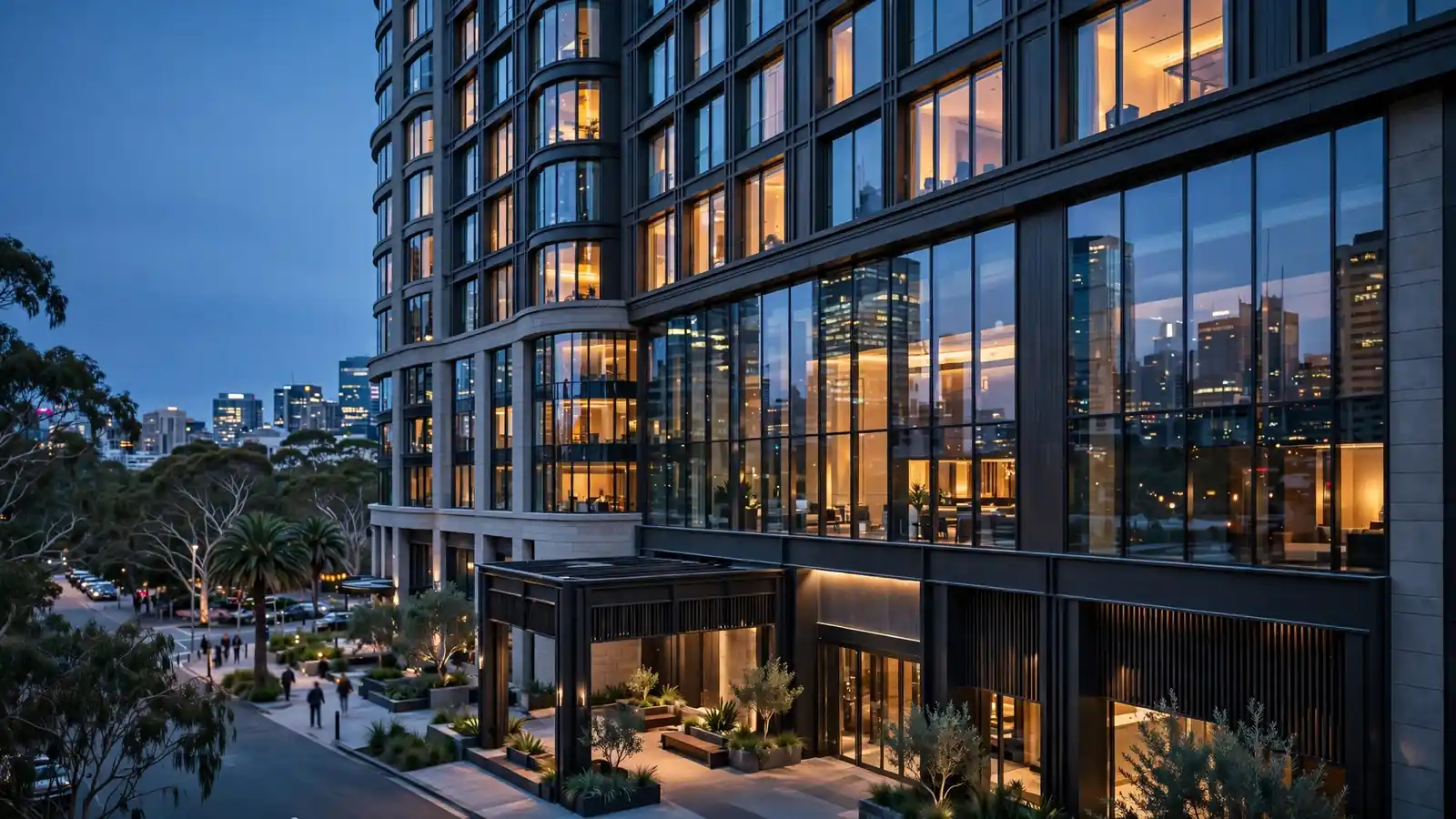
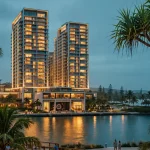
A casino visit that includes an overnight stay has two separate costs: the room and the visit itself. The room decision should be assessed on its own terms, not treated as an automatic part of a casino booking. A hotel listing associated with a casino does not, by itself, establish what rooms are available, what they include or what the final price will be.
Before choosing a room, confirm that the booking is for the intended property and dates. Search results and booking pages can use similar descriptions for different room types or packages. The property name, room category, arrival date and departure date should match across the offer and its terms. If any of those details are unclear, the displayed rate is not yet a usable comparison.
A room rate is meaningful only alongside the conditions attached to it. Check whether the quoted amount covers the full stay, whether taxes or other charges are added at checkout, and whether payment is due at booking or later. These details determine the amount payable and when it leaves the account.
Choosing a casino for Sydney play means weighing the details that are actually available, such as licensing, deposit requirements and payout methods. Use this list as a reference point and check the current terms before signing up.
SpinsUp
SpinsUp is listed under a Curaçao Gaming Control Board licence, OGL/2023/174/0082, held by Dama N.V.
Thor Casino
Thor Casino is licensed in Curaçao through Antillephone N.V. for Versus Odds B.V. The stated minimum deposit is EUR 20.
Wild Tokyo
Wild Tokyo lists a A$10 minimum deposit and Curaçao licensing. Its stated payout times are 30–60 minutes for crypto and 1–5 days for fiat.
Roby Casino
Roby Casino is licensed by Curaçao eGaming, with Roby Games Ltd named as the licensee.
Neospin
Neospin is listed under Curaçao Gaming Control Board licence OGL/2023/176/0095, held by Hollycorn N.V.
Uptown Pokies
Uptown Pokies is listed as operating since 2017 under a Curaçao licence. Its stated minimum deposit is A$20.
Rollero Casino
Rollero Casino is listed under Curaçao Gaming Control Board licence OGL/2023/176/0095, held by Hollycorn N.V.
7Bit Casino
7Bit Casino is licensed in Curaçao and operated by Dama N.V.
Ricky Casino
Ricky Casino lists a A$20 minimum deposit, rising to A$30 to qualify for the bonus. Its stated payout times are under an hour for crypto and 1–3 business days for PayID.
Kingmaker
Kingmaker lists a A$30 minimum deposit. Its stated payout times are about 90 minutes for crypto and 1–5 days for fiat.
Cancellation terms matter because a lower rate can cost more if plans change. Compare the refund conditions, the deadline for cancelling without a charge and any rules for changing dates. A non-refundable booking may be cheaper at the point of purchase, but the difference is the price of giving up flexibility. That is a calculation, not a perk.
Also check whether the rate is tied to a particular payment method, booking channel or package condition. The comparison should use the same dates and room category; otherwise, a difference in price may simply reflect a difference in what is being sold. A package should be valued only for inclusions that are clearly stated and useful to the stay.
Room descriptions should be read as specifications, not as promises inferred from photographs. Confirm the selected category and the stated occupancy, bedding arrangement and included amenities before paying. If a feature affects the booking decision, it needs to appear in the room details or be confirmed by the property. Images alone are not a reliable substitute for written terms.
The same applies to requests such as a particular view, bed configuration or room location. A preference entered during booking may not be a confirmed allocation. If the distinction affects the value of the rate, obtain confirmation before treating it as included. The final booking record should identify the room category actually purchased.
A hotel booking does not establish casino entry conditions, gaming availability or opening hours. Those details can change independently of the room reservation and should be checked with the relevant venue close to the visit. A room confirmation is evidence of accommodation, not a schedule for the casino.
The phrase “Sydney casino hotel” can refer to a property marketed in connection with casino facilities, but that label does not settle whether a particular room is available on the intended dates or whether a package includes anything beyond accommodation. Confirm each component separately. If the booking page does not state an inclusion, it should not be assigned a value in the comparison.
For a sound decision, the record needs four items: the exact property, the room category, the full payable amount and the cancellation conditions. Add the payment timing and any written confirmation of requested features. Without those terms, two offers cannot be compared on a like-for-like basis, however attractive one headline rate appears.
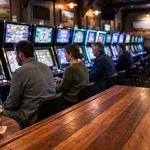
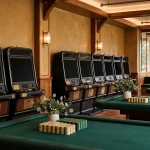
A request for poker at a Sydney casino can refer to two different activities: table poker, including tournaments, or poker machines, known locally as Electronic Gaming Machines (EGMs). The distinction matters because the NSW rules set out here concern gambling on poker machines. They do not establish the format, schedule, entry terms or availability of a poker room or tournament at a particular venue.
Poker-machine gambling in NSW is restricted to people aged eighteen or over. Venues must check identification to establish eligibility; attempting to gamble without meeting the age requirement can carry legal consequences. That age threshold is a condition of access, not a description of the rules for a table-poker event.
Age Requirement
Poker-machine gambling in NSW is restricted to people aged eighteen or over. Attempting to gamble without meeting this age requirement can carry legal consequences.
NSW also requires pre-commitment systems for poker-machine play. Players set a loss limit before starting, making the limit part of the decision to play rather than a figure reconstructed afterwards. It is a control on losses, not a prediction of the outcome of a session. A limit does not turn gambling into a reliable way to earn money, and increasing bets to recover losses only raises the amount exposed.
Those requirements should not be transferred automatically to poker tournaments. A tournament search concerns table-poker arrangements; a poker-machine search concerns EGMs and the associated state controls. Treating the two as interchangeable can lead to incorrect assumptions about eligibility, limits and the activity taking place. A venue’s current terms are needed for any specific tournament detail, while the NSW pre-commitment rule applies to poker-machine gambling.
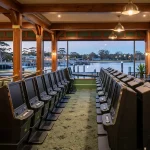
The scale of machine gambling in NSW can be illustrated by Club Liverpool: among NSW clubs, it has the largest count of poker machines in operation. That comparison is about machines at clubs, not poker tables, tournament capacity or the number of games available at a Sydney casino. It does not establish a ranking of casino poker rooms.
A practical comparison therefore needs separate columns. For poker machines, the relevant NSW points are the adult age threshold and the mandatory loss-limit setting before play. For a poker room or tournament, the useful details are the event format, schedule, entry conditions and current availability, but those are venue-specific and should be confirmed directly before making plans. A room listing alone would not settle whether a tournament is running or what its terms are.
The same separation applies when a venue search also mentions rooms or a sports bar. Hotel accommodation and bar facilities are separate from table poker and from the state controls on EGMs; neither is evidence that a poker event is available. Likewise, a venue being open on a particular day does not confirm that a tournament is scheduled. Dates and operating details can change, so they should not be inferred from a general description of the venue.
For a visit centred on poker, the decision is consequently two-part: establish whether the intended activity is table poker or machine gambling, then confirm the relevant venue arrangements. The legal baseline is clear for poker machines in NSW; it should not be presented as a schedule or rulebook for casino tournaments.
Breakfast, buffet and rewards searches point to different decisions, but the terms themselves do not establish what a Sydney casino venue currently offers. A breakfast listing might refer to a venue, a package or a meal included with a stay; “buffet breakfast” is more specific, but the wording alone still does not confirm that service is available. The distinction matters when comparing advertised inclusions with the final booking terms.
Before treating breakfast as part of a visit, confirm the venue, service date, serving hours, price and whether the meal is included or charged separately. Check that the details apply to the intended location rather than to another property in the same group. A page describing a past promotion is not evidence of a current offer. If the terms do not state what is included, the cost cannot be calculated reliably.
A breakfast listing may refer to a venue, a package, or a meal included with a stay; the wording alone does not confirm that the service is currently available.
Buffet claims need the same discipline. A buffet may be a breakfast service, a separate dining option or a promotion with conditions. Confirm the meal period, availability on the relevant date, booking requirements and any limits attached to an offer. “Buffet” does not, by itself, establish a menu, price or service schedule. Those details should be treated as unresolved until a current venue listing or booking confirmation states them.
The word “resort” also does not settle the question. It is a broad description, not a complete list of services. It cannot confirm that breakfast is served, that a buffet is operating or that a package includes either one. For a sound comparison, separate the label from the item being purchased: identify the actual meal and its terms, then compare the final amount payable. An attractive package headline is not a cost breakdown.
Rewards require a separate check. The term can refer to a membership programme, an offer or a general promotional label; it does not establish that a particular benefit applies to dining. Any claimed reward should be checked for eligibility, participating venues, exclusions, expiry conditions and whether it changes the bill or merely provides access to an offer. Without explicit terms, its cash value is not measurable. A benefit with conditions is not equivalent to a discount available on every visit.
Employment searches raise a different set of questions. A general reference to casino jobs does not confirm that vacancies are open, which employer is hiring or what a role pays. Current openings should be checked through the relevant employer’s careers channel. The listing should identify the employing organisation, position, work location, duties, employment type and application process. Those are the terms needed to assess a role; a broad jobs page cannot substitute for them.
The practical standard is straightforward: confirm each service or vacancy against current, specific terms before assigning it a value. Breakfast is not confirmed by a resort label, a buffet is not confirmed by a breakfast mention, and a rewards benefit is not confirmed by the word “rewards.” For employment, a venue’s name in a listing does not alone establish who employs the worker. Separate claims, conditions and final costs before making a comparison.
Parking is a practical arrival question, but a venue name alone does not settle whether parking is available, whether valet service operates, or whether any parking is free. Those are separate conditions, and each can change the cost and timing of a visit. Before setting out, confirm the current arrangements with the venue or the relevant parking operator, including access, charges and any conditions attached to a complimentary offer. A free-parking claim without its eligibility terms is not a usable price.
The distinction matters because a search for a Sydney casino can return results about the physical venue alongside results for online gambling. They are not interchangeable services. A visit involves travel and entry to a venue; an online casino involves gambling delivered over the internet. Terms about online casino games do not establish anything about a venue’s parking, and a parking result does not confirm that an online service is lawful.
Attention: Under the Interactive Gambling Act 2001, operators based in Australia cannot lawfully offer real-money online casino games to people in Australia.
Under the Interactive Gambling Act 2001, operators based in Australia cannot offer real-money online casino games to people in Australia. The restriction covers casino-style games such as pokies, blackjack and roulette. An Australian-run online casino therefore cannot lawfully provide those services to local players.
Offshore platforms sit in a different legal position, but that does not make them Australian-regulated. It is technically not illegal for an Australian player to use one, while the platform itself remains outside Australian regulation. The practical distinction is between the player’s position and the operator’s obligations; treating an offshore site as equivalent to a locally regulated venue would collapse two different arrangements into one.
Online access may also be restricted by location. A platform can use an IP address to identify a player’s country and block access accordingly. If a VPN is used to make an Australian connection appear to come from elsewhere, that can breach the site’s terms of service and lead to account suspension. It does not change the underlying Australian legal framework or turn an offshore operator into a locally regulated provider.
For a physical visit, the relevant cost calculation is straightforward: identify the parking arrangement, confirm the applicable charge and conditions, then include that amount in the trip budget. Valet parking and complimentary parking should be treated as distinct offers, not assumed features. A dining booking or a casino-related search result is not evidence that parking is included.
The same separation applies to results mentioning bingo, dining or online play. A phrase linking Sydney with casino bingo or dining may describe a venue-related search, while an online-casino result concerns a different service and a different legal question. Neither establishes current venue arrangements. The useful decision is to verify the physical visit details through the venue’s own current information and to assess online-casino claims separately under Australian law. A familiar city name in a web address or search result is not proof of local licensing.
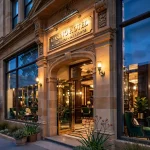
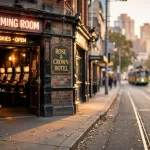
“Accommodation near the casino” and a stay on the casino property are different booking propositions. The first may mean a separate accommodation provider in the surrounding area; the second means lodging presented as part of the venue itself. A listing’s wording alone does not establish which applies. Before comparing prices, confirm the property’s actual relationship to the casino and whether the booking is made with the accommodation provider or through another seller.
The useful comparison is the full cost of the stay, not a headline deal. Record the quoted room price, mandatory charges, taxes, booking fees and any conditions that could change the final amount. Check whether the displayed price covers the whole stay or is presented per night, and whether payment is due at booking or later. A lower advertised rate can cease to be lower once fees or restrictive terms are included.
Cancellation rules matter because they determine how much of the booking cost remains at risk if plans change. Check the deadline for cancelling without charge, whether a deposit is refundable and what happens if the booking is amended. These conditions should be read before payment, not inferred from words such as “flexible” or “deal”. The value of a promotion depends on its terms and the final payable total; the label itself has no accounting value.
For accommodation near the casino, assess the route between the property and the intended destination using current mapping information. A property described as nearby may still require a journey that affects the schedule or transport budget. Compare the route at the times the visit is planned, rather than relying only on a map pin or a general location label. This is a practical comparison, not a claim about any particular property’s distance or access.
A stay presented as on-site may reduce the need to travel between accommodation and the venue, but that advantage should be confirmed rather than assumed. Check the exact property address, what the booking includes, and whether access to the casino is separate from the accommodation arrangement. A shared brand, marketing page or booking channel does not by itself establish that rooms are within the casino building or that any casino-related benefit comes with the stay.
For a fair comparison, place both options in the same ledger: total accommodation cost, transport required, payment timing, cancellation exposure and the conditions attached to any promotion. Keep accommodation benefits separate from venue access. A package that appears to bundle both is only comparable once each component and its terms are clear.
The phrase “Sydney casino accommodation deals” can therefore cover unlike offers. One may be a room rate, another a package, and another a nearby stay with no venue connection. Treat each as a separate contract and compare the amount payable and the obligations attached. If a listing does not state the property, final cost or cancellation terms clearly, it is not yet a usable basis for choosing where to stay.
A request for a Sydney casino contact number is practical, but a number repeated across directories may be outdated or attached to a different department. Before relying on it, match the listing to the venue’s own current contact channel. For a specific issue, such as access, lost property or a booking, the relevant department matters: a general switchboard may not handle it. No number or department can be treated as confirmed merely because it appears alongside the venue name.
The same distinction applies to a map. A pin can show a general location without confirming an entrance, drop-off point, accessible route or car-park entry. Those details affect the journey, so a map result should be checked against current venue directions before travel. A label for a car park does not establish its availability, access conditions or charges; those need confirmation from the operator.
Game names require similar care. A page referring to baccarat or craps does not, by itself, establish that either game is currently offered at a particular Sydney venue, or explain its format, table availability or operating times. Those are venue-specific details and can change. A current listing from the operator is more relevant than an old directory entry or an undated discussion post.
There is also a legal distinction between games played at a physical venue and online casino services. Under the Interactive Gambling Act 2001, operators based in Australia cannot provide real-money online casino games, including table games and pokies, to people in Australia. A website describing an online version of baccarat or craps should not be read as proof that the service is lawful or available locally.
A bar listing is not a complete description of the venue’s facilities. It does not confirm a bar’s location, current service arrangements or whether access depends on an event or booking. Those points are best checked directly through current venue information. Restaurant menus and dining recommendations are separate questions; a bar reference alone does not answer them.
Concert-related information also needs a date and a clear event source. A mention of concerts does not confirm a performance, ticket availability or entry arrangements. Event details can be checked against the organiser or venue’s current announcement, rather than inferred from a general entertainment page. This is especially important when a third-party listing gives no update date.
For any contact or visit, the useful record is the exact detail being relied on: the department reached, the purpose of the call, and any confirmation received about the relevant game, access point or event. Without that confirmation, a number, map marker or game label remains a lead, not an operational guarantee. In practical terms, the name of a service is not the service itself.
Opening hours, reopening status and event schedules are separate questions from whether a Sydney casino exists as a search result. A listing or review may be out of date, and a general description of entertainment does not establish that a particular show, event or service is running on a given date. For a planned visit, the useful check is the venue’s current official notice for its operating status and event calendar. Treat an old announcement as historical, not as confirmation of what is open now.
The same distinction applies to development and employment information. A project update can describe a proposal or stage of work without confirming present-day access or entertainment. A vacancy notice indicates a role was advertised; it does not establish current recruitment or operating hours. These details need their own dated confirmation rather than an inference from a broad venue review.
Online-game availability is a different issue again. Under the Interactive Gambling Act 2001, operators cannot provide real-money online casino games, including pokies and table games, to people physically located in Australia. That legal restriction concerns online services; it should not be confused with the opening status of a physical venue.
Where an online game lobby is accessed from an Australian IP address, region-blocked titles may not appear. A casino or software provider can restrict access where its licensing jurisdiction requires it. A game that is visible elsewhere may also fail to load because of a regional restriction. In either case, absence from the lobby or a loading error is not evidence that the game has been removed everywhere.
One specialist review describes some providers blocking Australian access in anticipation of possible future changes to gambling laws. That is a report about a particular rationale, not proof that every provider follows the same policy. The applicable restriction can depend on the provider and its licensing jurisdiction.
Attention: Using a VPN to access region-blocked pokies can breach an operator's terms of service and lead to account suspension.
A VPN can make a connection appear to come from another country, but using one to reach region-blocked pokies can breach the operator’s terms and lead to account suspension. A changed digital location does not change where a player is physically located or the Australian legal position. Bypassing a block is therefore not a reliable route to access.
For a Sydney visit, check the venue’s current opening and event information before setting travel plans; online lobby availability answers neither question. For online casino games, the governing distinction is not whether a title appears in a review or loads on a screen, but whether the service may lawfully be offered to someone in Australia.
An address is not a minor booking detail: it determines the arrival point, the route and whether a map pin refers to the casino itself or another part of a larger property. “Sydney casino” can also be used loosely for different venues. Before setting off, match the venue’s full name and street address against its official contact or directions page, then check that the map result leads to the same place. A search snippet or an old saved pin is not a reliable substitute for that comparison.
Spa searches need the same distinction between a requested facility and a confirmed offering. A casino’s association with a hotel or resort does not, by itself, establish that a day spa operates there, what treatments it provides, or whether appointments are available to non-guests. Those details can change. A current facility page or direct confirmation from the venue is needed before building a visit around a treatment. Without that confirmation, a spa should not be treated as part of the casino itinerary.
Dress-code information is similarly venue-specific. A general assumption about what is acceptable at a casino cannot establish the rules for a particular gaming area, event or dining space. The practical check is the venue’s own entry guidance, especially where a visit includes more than one part of the property. If the policy is unclear, direct confirmation is more useful than relying on an informal account that may describe a different area or an earlier policy.
Careers information belongs to a separate track from visitor planning. Employment vacancies, application requirements and recruitment contacts should be checked through the relevant operator’s official careers page; a venue address or visitor contact page does not establish that a vacancy is current. Likewise, searches for casino games do not confirm which games are available at a particular venue or under what entry conditions. Those details require current venue information rather than inference from the casino label.
The reliable planning record is therefore short: confirmed venue name, matching address, current entry guidance and direct confirmation of any spa facility being relied on. The same check prevents a property name, a map result and a facility listing from being treated as interchangeable. Spa access, dress expectations and employment details are separate questions, and each needs its own current answer.
A restaurant associated with a Sydney casino is a separate decision from a room booking or a visit to the gaming floor. The venue name alone does not establish what is served, whether a table is available, or what the final bill will be. Those details need to be checked against current information before they enter a dining plan.
Restaurant listings can describe different things: a dining room inside a casino complex, a restaurant elsewhere on the property, or a place in the surrounding area. “At” and “near” are not interchangeable when timing and travel arrangements matter. A listing should make clear which location it refers to; otherwise, the apparent convenience may exist only in the wording.
The same distinction applies to a rooftop bar. The phrase describes a type of venue, not confirmation that a particular Sydney casino has one. Before building an evening around that idea, check the venue’s own current listing for its location, entry arrangements, service times and any booking conditions. A photograph or an old directory entry is not a substitute for current operating information.
Menus and prices also need to be treated as changeable commercial terms. A menu may be seasonal, a listed price may not cover every charge, and a special offer may have conditions attached. The useful comparison is the expected total for the intended meal, including any stated service or booking terms, rather than a headline price considered on its own. If the menu or conditions cannot be confirmed, the cost cannot be calculated reliably.
Restaurant dining should not be conflated with buffet or breakfast arrangements. Those are distinct formats and may have separate access, service periods and pricing. A restaurant listing does not establish that either is included or available. Likewise, a bar listing does not confirm food service, table availability or a particular atmosphere.
For a practical check, confirm the exact venue name and location, current menu, prices, operating status, booking requirements and cancellation terms through the operator’s own information before travelling. If those details are unclear, treat the plan as unconfirmed rather than filling the gaps with assumptions. For a visit to a casino in Sydney, the dining decision is only as dependable as the details that can be checked.
Food and pool searches describe different parts of a visit, but neither phrase establishes that a casino has the facility being sought. A food court would mean a shared area with several food outlets; a pool would be a separate leisure amenity. Treating either as a confirmed feature without current venue information turns an assumption into a plan.
For food, the useful distinction is between a place to eat and a dedicated food court. A venue may have dining options without a shared, casual dining area, and the term “casino food” does not settle which arrangement applies. Before making a decision around a food court, confirm that it operates at the relevant venue and check its current access and service details. Those details affect whether it fits the timing and purpose of a visit; the label alone does not.
A pool requires a separate check. It should not be inferred from the word “resort”, from accommodation listings, or from images that may relate to another property or an earlier period. Confirmation should identify the facility as part of the intended venue and establish whether access is available to the people making the visit. Without that, a pool should not be included in the itinerary.
The financial distinction is straightforward: an unconfirmed facility has no dependable value in a visit plan. Food-court and pool expectations should therefore remain provisional until the venue’s current information confirms them. This is not a judgement about the quality of a casino stay; it is a boundary between a search phrase and a facility that can actually be relied on. If either amenity is essential, the decision should wait on explicit confirmation rather than an inference from general resort language.
Yes. The Interactive Gambling Act bars Australian-based operators from offering online casino games such as pokies, blackjack and roulette to people in Australia. Australian players are not technically prohibited from using offshore sites, but those platforms are not regulated under Australian law.
An online pokie uses a Random Number Generator, so each spin is independent and previous results do not affect the next one. Its RTP is the theoretical share of wagers paid back over a very large number of spins.
Examples include NetEnt progressive jackpot games Mega Fortune and Hall of Gods, and NYX Gaming/Next Gen games Foxin’ Wins and Doctor Love. Geo-blocking can use a player’s IP address, so blocked games may not appear in the lobby or may fail to load from Australia.