The available evidence can help assess locations and opening information, but it does not support a reliable ranking of Geelong pokies.
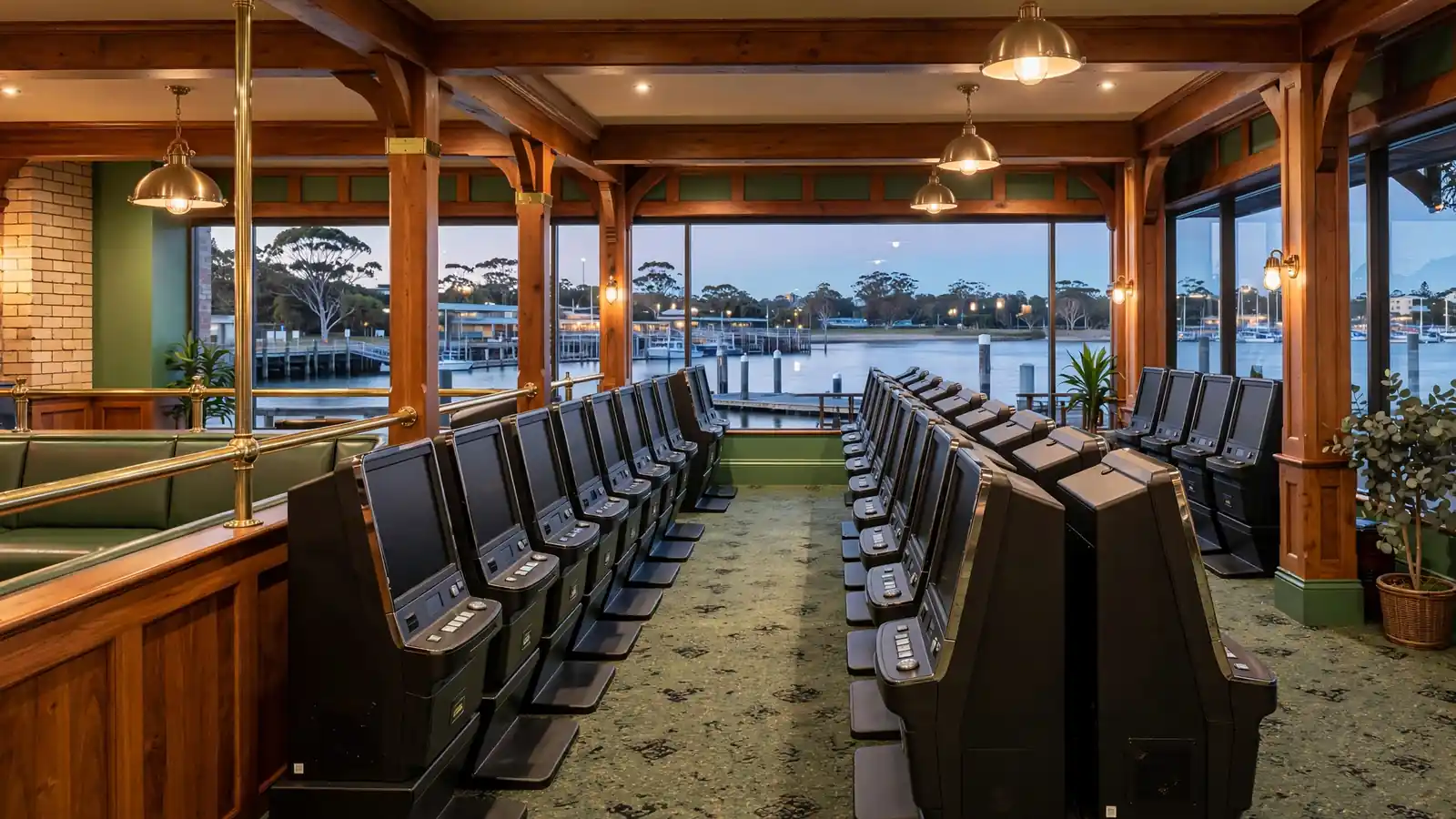
A claim that one Geelong venue has the best pokies needs more than a name and a machine-room impression. It needs comparable information about the games available, the conditions attached to them and the basis for calling one option better. Without that, a ranked list would present opinion as measurement.
The distinction matters because “best” can refer to different things. It might mean a preferred game selection, a particular return-to-player setting, or simply a room someone enjoys visiting. Those are not interchangeable measures. A venue’s popularity, appearance or reputation does not establish that its pokies pay more, and a list of familiar game titles would not establish that either.
Return to player (RTP) is a theoretical measure over extensive play, not a promise about the result of an individual session. A specialist review has reported that some providers allow casinos to choose among different RTP settings for the same pokie. That is a source-specific claim, not a verified statement about every provider or any particular Geelong machine. Even where a setting is known, it cannot predict what a machine will return to a player on a given day.
Choosing online pokies from Geelong means checking the details that matter to you, such as licensing, deposit requirements, and payout options. This list offers a concise reference for considering the available information in 2026.
SpinsUp
SpinsUp is listed with a Curacao Gaming Control Board licence, OGL/2023/174/0082, held by Dama N.V.
Thor Casino
Thor Casino is associated with an Antillephone N.V. licence in Curacao, with Versus Odds B.V. named as operator. Its minimum deposit is EUR 20.
Wild Tokyo
Wild Tokyo lists a minimum deposit of A$10 and gives separate payout estimates for crypto and fiat: 30–60 minutes and 1–5 days, respectively. It is licensed in Curacao.
Roby Casino
Roby Casino is listed under a Curacao eGaming licence held by Roby Games Ltd.
Neospin
Neospin is listed with a Curacao Gaming Control Board licence, OGL/2023/176/0095, held by Hollycorn N.V.
Uptown Pokies
Uptown Pokies is listed as operating since 2017 and licensed in Curacao. Its minimum deposit is A$20.
Rollero Casino
Rollero Casino is listed with a Curacao Gaming Control Board licence, OGL/2023/176/0095, held by Hollycorn N.V.
7Bit Casino
7Bit Casino is licensed in Curacao and operated by Dama N.V.
Ricky Casino
Ricky Casino lists crypto payouts in under an hour and PayID payouts in 1–3 business days. Its minimum deposit is A$20, or A$30 to qualify for the bonus.
Kingmaker
Kingmaker lists crypto payouts at around 90 minutes and fiat payouts in 1–5 days. Its minimum deposit is A$30.
Each spin is a separate random event determined by a Random Number Generator. A previous win or run of losses does not make a later spin “due” to pay. Nor does a short sequence provide a reliable way to compare two machines. In practical terms, an observed payout is an outcome, not proof of a machine’s long-run return or a venue’s overall performance.
That limits what can be said about the best-paying pokies in Geelong. To support that label, a comparison would need identified machines and reliable information about their settings, gathered on a consistent basis. A list based on anecdotes, isolated wins or player preference would not meet that standard. The phrase “best paying” may sound precise, but without a defined measure and comparable records, it has no stable financial meaning.
The same caution applies to broad descriptions of Geelong casinos and gaming venues. A search phrase that combines Geelong with “casino pokies” does not itself establish that a casino operates there, what machines a venue has, or how those machines are configured. General information about pokies cannot fill in those venue-level details. Naming a local establishment or assigning it a machine count without a reliable basis would create an appearance of certainty that the figures do not support.
City-centre wording adds another layer of specificity, not evidence. “Geelong CBD” or “Geelong city” may describe the area someone has in mind, but those terms do not identify a particular gaming room or verify its offering. A local comparison would require confirmed venue details and information tied to each venue. Without those, a CBD ranking would be no more measurable than a city-wide one.
Online play is also a separate subject from the pokies available at a physical venue. The word “Geelong” in an online search does not show that a service is local, that its games correspond to machines in the city, or that a local venue is connected to it. Treating online games and venue machines as one category would blur two different forms of play and make any comparison less useful.
For a reader assessing a claim, the useful distinction is between a verifiable attribute and promotional language. A named game is an attribute only if its presence at a specific venue is confirmed; an RTP figure needs a reliable basis and must relate to the relevant setting. “Popular”, “loose” or “best” are not substitutes for those details. Where figures cannot be tied to a venue and a method, they cannot support a financial comparison.
Without comparable venue-level details, no order of merit, machine total or payout advantage can be stated as fact.
A gaming room’s opening time is a venue-specific detail, not something that can be inferred from the word “pokies” or from a general listing for a club, hotel or entertainment venue. The room may have its own operating schedule, separate from the venue’s broader trading hours. A venue being open does not, by itself, confirm that its gaming area is operating at that moment.
Gaming room operating schedules may differ from the broader trading hours of the venue, such as a club or hotel.
For a current status, the useful evidence is a direct, recent notice from the venue or confirmation from its staff. An old directory entry, a search result snippet or a copied listing may be out of date. Where a listing gives general venue hours but says nothing about the gaming room, it does not settle whether the machines are available. The distinction matters particularly for early or late visits, when a broad opening-hours label can leave the central detail unanswered.
The same standard applies to an advertised opening time. A stated time should clearly refer to the gaming room, identify the relevant day, and be current. If those details are absent, the time may describe another part of the venue or a schedule that has since changed. A direct confirmation is more useful than interpreting an incomplete listing; it establishes the status for the particular day rather than inviting a guess from an old entry.
“Open now” is also time-sensitive. A page that was accurate earlier can become stale, and a general schedule does not confirm that the room is operating at the moment of checking. A venue’s own current update or a direct response from staff is the relevant confirmation. If neither is available, the status remains uncertain. That is a limit on the claim, not a reason to convert an unconfirmed time into a definite one.
For planned visits, the practical details to establish are whether the gaming room is operating on the intended day, its opening and closing times, and whether any temporary change applies. Public holidays, special events or other changes can affect a schedule; these are reasons to confirm the date rather than assume the usual listing applies. No particular Geelong opening time can be stated as a general rule across venues.
Responsible-gambling requirements concern venue operations, but they should not be mistaken for a timetable. A report by regionriverina.com.au describes a requirement taking effect from 1 July for venues with more than 20 gaming machines: a Responsible gambling officer (RGO) is to be present while those machines are running. The same report describes a required register for recording gambling-related incidents, including conduct that may indicate a patron is experiencing harm. These are operational safeguards, not evidence that a particular room is open, nor a source of its daily schedule.
The RGO detail can help distinguish an operating requirement from an opening-hours claim. It does not establish the machine count at any Geelong venue, confirm that a specific room is operating, or provide its start time. Likewise, an incident-register requirement says nothing about when a room opens. Hours need to be confirmed on their own terms, through current venue-specific information.
A search for an early opening time should therefore be treated as a request for a precise schedule, not as proof that a room opens at that time. The same applies to claims about late opening. Without a current statement tied to the particular gaming room and day, neither an early nor a late time is established. A venue may publish hours for its main facilities while leaving gaming-room hours unclear; in that case, the room’s status remains the unresolved point.
A payout percentage is a separate question from opening hours. The time a room operates does not establish the return setting of any machine, and a general venue listing cannot confirm a game’s configuration. No percentage should be inferred from a venue’s schedule or from the fact that its machines are operating. The relevant information would need to relate to the specific machine or game, not merely the venue’s trading hours.
The dependable approach is narrow: confirm the room, the date and the operating status through a current venue-specific channel. If the information refers only to the wider venue, lacks a date, or comes from an undated listing, it does not confirm that the gaming room is open now. That leaves the status unconfirmed rather than turning an approximate schedule into a fact.
A search for online pokies in Geelong can blur two separate questions: whether an operator may legally offer real-money casino games to people in Australia, and whether an individual player faces a penalty for using an offshore site. Under the Interactive Gambling Act 2001, the principal restriction applies to operators. Companies cannot lawfully provide real-money online casino games, including pokies, to customers located in Australia without a domestic licence. No Australian licences for online casinos have been issued.
That leaves no Australian-licensed online casino. A website’s availability to Australian users does not make its service lawful under Australian rules, and an overseas licence does not substitute for a domestic one. The legal position is about where the customer is located and what service the operator provides, not whether a site describes itself as international or lists Australian dollars.
The Australian Communications and Media Authority (ACMA) enforces the Interactive Gambling Act. Its role includes blocking access to illegal offshore gambling sites; internet service providers must comply with ACMA’s blocklist. Blocking does not establish that every offshore site is inaccessible at every moment. It does mean that a site loading successfully is not evidence of Australian approval, and access may be restricted.
The law’s focus on operators also matters. An Australian player is not the party the Act targets for the offence of providing a prohibited service. That distinction should not be mistaken for consumer protection. If an offshore casino withholds winnings, an Australian player has no legal recourse in Australia to compel payment. The operator’s location and foreign licensing arrangements can leave a dispute outside practical reach of Australian remedies.
Search phrases about “real money”, “no deposit” offers or high-limit play do not change that framework. A bonus is a commercial condition, not a licence. Nor does a claim that a game pays well establish its legality, the operator’s standing in Australia, or the likelihood of a particular result. Each pokie spin is an independent random event determined by a Random Number Generator; a location term such as Geelong has no bearing on that process.
The same distinction applies when online terms are combined with local place names. Online play is not an extension of a Geelong venue, and an offshore site does not become a local casino by serving people in the region. Searches that mention central Geelong or nearby areas may describe the user’s location, but they do not alter the operator’s obligations under federal law.
Legal Risk
Under the Interactive Gambling Act 2001, no Australian licences for online casinos have been issued; offshore sites offer no legal recourse in Australia for payout disputes.
For a money decision, the relevant exposure is not limited to a displayed balance. The absence of Australian legal recourse in an offshore payout dispute is a material condition: winnings shown on an account may not be recoverable through Australian processes if the operator refuses to pay. That is a different risk from the game’s random outcome and cannot be assessed by comparing advertised limits or promotional wording.
Responsible-gambling tools such as deposit limits, loss limits, session time limits and self-exclusion can help manage play, but they do not legalise a prohibited service or guarantee a remedy in a dispute. BetStop applies only to Australian-licensed operators; it does not bind offshore sites. The legal age for gambling in Australia, including online pokies, is 18, but meeting the age requirement does not change the restrictions on operators.
The practical distinction is therefore narrow but important: Australian law prohibits companies from providing real-money online casino games to people in Australia, while the player is not the target of that operator offence. Offshore access, where it occurs, is not equivalent to domestic licensing, and the lack of Australian recourse in a payout dispute remains a direct financial risk.
A venue described as “near Geelong” is not necessarily near Geelong Airport, the central business district or North Geelong. Those are separate location claims.
The airport wording also needs care. A search for pokies at Geelong Airport could mean machines inside the airport, a venue on airport grounds, or a venue somewhere in the surrounding area. These are not interchangeable.
The same distinction applies to the CBD. “Near the CBD” should refer to a specific address and a clearly defined destination point, not simply a Geelong label. A venue might be described as being in the city while still requiring travel from the central streets or transport hubs.
North Geelong is another distinct area, not a synonym for central Geelong or the airport. A venue’s association with the broader Geelong region would not establish that it is in North Geelong, close to the airport, or convenient for a CBD destination. Each of those statements requires a location that can be checked independently.
Distance itself depends on how it is measured. A straight-line map distance does not necessarily reflect a practical road route, walking route or public transport journey. The starting point matters too: an airport terminal, the airport boundary and a particular point in the CBD produce different comparisons. A proximity claim without those details can sound precise while answering no practical question.
For a usable location comparison, the basic record would include a venue’s current street address and the specific destination used as the reference point. A map route could then show the relevant travel distance and route. If the listing says “inside the airport,” that wording should be supported by an address or other clear location detail rather than inferred from a nearby place name.
A usable location comparison requires a venue's current street address and a specific destination reference point to determine actual travel distance and routes.
Search phrases such as “pokies near me” do not resolve these distinctions. “Near me” changes with the device’s location, while a result labelled Geelong may cover a wider area than the person intends. A map pin, venue address and route are more informative than a broad locality label; without them, proximity cannot be assessed.
The geographical terms point to different destinations, and none can be treated as proof of a venue’s position. Any specific claim about a Geelong Airport venue, an airport-area option or a CBD-adjacent location would need address-level confirmation before it could be relied on.
A meaningful comparison of Geelong venues needs consistent, venue-specific information. A name on a list or a claim that one room is “best” does not establish how its facilities compare with another’s. Without comparable records, a ranking would be presentation rather than analysis.
Useful evidence would identify the venue and the date the information was checked, then set out the same attributes for each location. These might include the number of machines, the facilities available in the gaming area, accessibility information and the venue’s published responsible-gambling procedures. Each item needs a traceable source: a current venue statement, a regulator’s record or another document that can be checked. A detail reported for one venue cannot safely be assumed to apply to another.
Machine count, on its own, is not a measure of quality. It tells nothing about the condition of the room, the availability of support or whether a venue’s published policies are being followed. Nor does a larger selection establish better value. Those are separate claims and need separate evidence.
Responsible-gambling arrangements are one comparison point, but the jurisdiction and date matter. A report by regionriverina.com.au describes a requirement for venues with more than 20 gaming machines to have a dedicated responsible gambling officer on duty while the machines operate. It also reports a grace period for venues to remove signage and introduce those officers, and a requirement to keep a register of gambling-related incidents, including behaviour indicating that a patron may be at risk of harm. This is a reported rule, not proof that a particular Geelong venue has a given number of machines or that the requirement applies there. Local obligations need to be checked against the rules governing the venue.
For a fair comparison, reporting would also need to distinguish a written policy from evidence of implementation. A venue’s statement that support is available is not the same as independently documented staffing or records. Incident information should be handled with care: the relevant comparison is whether an appropriate process exists, not private details about individual patrons.
The same standard applies to claims about a venue’s reputation. Reviews can describe individual experiences, but they do not establish a consistent measure across venues. A credible assessment would explain what was measured, when it was measured and whether the same method was used for each location. If those conditions are absent, a score or ranking may conceal more than it clarifies.
Accordingly, no defensible “best pokies venue in Geelong” designation follows from a venue name alone. A comparison becomes useful only when its attributes are current, specific and supported by evidence that can be checked. Until then, a neutral description is more accurate than a ranked recommendation.
A venue’s gaming-room hours are a separate operating condition from the fact that it has pokies. A claim that a Geelong venue is open around the clock needs to apply to the specific venue and to its gaming area, not merely to another part of the premises. Restaurant, bar or building access does not establish that pokies are available at the same times.
“Open 24 hours” is also a stronger claim than a broad description such as late opening. It means continuous availability across the full day, including overnight periods. Without a current schedule for the named venue and gaming room, that description cannot be treated as established. The same distinction applies to general opening-hours information: a venue’s published trading hours may not specify when its gaming facilities operate.
Hours can be affected by venue decisions and operating conditions, so an old listing may not reflect the present schedule. A dated notice, venue-controlled information or direct confirmation is more useful than an undated directory entry. The detail to establish is not simply whether a venue is open, but whether the gaming room is open at the time in question and whether the stated hours cover the relevant days.
There is a further regulatory detail for larger gaming rooms. A report published by regionriverina.com.au describes a requirement taking effect from 1 July: venues with more than 20 gaming machines must have a Responsible gambling officer (RGO) on duty while those machines are operating. That condition concerns staffing during machine operation. It does not set venue opening hours or show that a room runs continuously. Operational coverage and round-the-clock access are different matters.
A claim about 24-hour pokies in Geelong should therefore be read as a venue-specific schedule claim, not as a general feature of the city. The words “open all day” may refer to the premises, while the gaming room has a narrower schedule; only information that identifies the gaming area resolves that distinction. Where a schedule gives separate hours for different facilities, the gaming-room entry is the relevant one.
For an overnight visit, the decisive information is the current gaming-room schedule for the particular venue and date. A broad statement about trading, or a listing that does not distinguish the gaming room from the rest of the premises, cannot establish that pokies will be available continuously. Until that distinction is clear, 24-hour availability remains an unsubstantiated description rather than a usable operating fact.
A reference to Crown in connection with Geelong does not, by itself, establish that Crown operates a venue there. Nor does it confirm that a Crown-branded gaming room, or any particular pokie offering, is available in the city. Those are separate claims: one about a venue’s presence and another about what it provides. Neither should be treated as settled merely because the name and location appear together.
That distinction matters when assessing whether Crown has a Geelong gaming room or what its machines might offer. Without a confirmed venue and information tied specifically to it, there is no sound basis for describing its room, identifying its machines, or comparing it with other local venues. A brand association is not a venue listing, and an unconfirmed listing cannot support a ranking.
Attention: A brand association with Crown does not establish the existence of a venue, its specific machine offering, or its payout terms in Geelong.
The same limit applies to a request for the best pokies room in Geelong. “Best” needs a defined measure and evidence for the venues being compared. Possible measures could include the size of a gaming room, available facilities, or published machine information, but none can be attributed to a Crown venue in Geelong without confirmation. Naming a winner under those conditions would turn an unverified premise into a recommendation.
A maximum cash payout is also a venue- or machine-specific detail, not something that can be inferred from the Crown name or the city. It would require reliable information identifying the relevant machine and the terms that apply to its payout. No maximum can be stated for a purported Geelong Crown room on the basis of the name alone. A payout figure without that link would have little practical meaning.
The careful reading is therefore narrow: Crown-specific claims about Geelong remain unsubstantiated. This does not establish that a venue does or does not exist; it establishes that the association cannot be relied on as proof. Any listing making a stronger claim would need to identify the venue clearly and support its details with current, venue-specific information.
That standard keeps three questions separate: whether Crown has a Geelong venue, what facilities or machines that venue has, and what payout terms apply to a particular machine. An answer to one does not answer the others. Until those details are independently confirmed, there is no defensible Crown-based comparison or local payout figure to report.
A search for pokies at clubs in central Geelong does not, by itself, establish which clubs have gaming machines or what those rooms offer. Nor does the word “best” provide a basis for ranking venues. A comparison would need consistent, venue-specific information; without it, naming a leading club would turn an unsubstantiated impression into a recommendation.
The distinction matters because a club’s identity and its gaming facilities are separate details. A club name or a central-Geelong address is not proof of a pokies room, its machine count, or the terms under which it operates. Those claims require confirmation from the venue or an authoritative record. None should be inferred from a listing label alone.
There is a general operating rule reported by regionriverina.com.au: from 1 July, venues with more than 20 gaming machines are required to have a dedicated Responsible gambling officer (RGO) on duty while those machines are operating. That rule describes a threshold and a staffing condition; it does not identify any Geelong club, establish its machine count, or confirm that a particular venue falls within the requirement. The date is also not enough, on its own, to establish the current arrangements at an individual venue.
Self-exclusion is a standard responsible-gambling tool, but that general fact does not specify how any particular Geelong club handles enrolment, access restrictions, or contact with excluded patrons. Those are operational details, not something that can be assumed from the presence of pokies or from a venue’s club status. A venue-specific account would need to state the process and scope clearly.
Regulatory Requirement
From 1 July, venues with more than 20 gaming machines must have a dedicated Responsible gambling officer (RGO) on duty and maintain an incident register.
Accordingly, the useful distinction is between general obligations and local particulars. The reported RGO rule applies according to machine numbers and operating status; self-exclusion is a recognised tool. Neither establishes which clubs in the CBD offer pokies or which one would be “best.” A defensible venue comparison depends on confirmed details for each named club, rather than on its location or category alone.
A mention of Parkes alongside Geelong does not, by itself, establish which place or venue is meant. It could be a place name, part of a venue name, or wording carried over from another location. Without a confirmed connection, attaching that reference to Geelong would turn an ambiguous phrase into a local claim.
The distinction matters when assessing requests for pokies in Geelong. A result that combines the two names is not enough to establish that a venue is in Geelong, that it has pokies, or that it is the venue intended by the Parkes reference. Those are separate details, and each requires confirmation from reliable venue information. A plausible interpretation is not a verified address.
The same care applies to descriptions such as “best pokies in Geelong”. “Best” can refer to different things: a venue’s facilities, its location, the number or range of machines, or a reviewer’s preference. The word alone supplies no measure for comparing venues. A ranking would require a defined criterion and evidence about the venues being ranked; otherwise, the order would have no auditable basis.
For a useful location check, the place name needs to match an identifiable venue, and the venue’s own current details need to confirm the location. If Parkes appears only in an incomplete listing, an isolated mention, or wording with no clear relationship to Geelong, it should not be treated as proof of a Geelong destination. The prudent classification is unresolved, not local.
This also keeps a geographic search separate from an online gambling question. In Australia, the Interactive Gambling Act 2001 prohibits operators from providing real-money online casino games, including pokies, to people physically in the country. That rule does not establish where a land-based venue is located; nor does an ambiguous place name establish an online service’s legal status.
For anyone comparing Geelong venues, the Parkes wording should therefore be treated as a lead requiring clarification, not as a venue recommendation or a confirmed local connection. Until the name can be tied to a specific, identifiable Geelong venue, it cannot support a claim about where to play.
PayID is a bank-transfer service, not evidence of a venue’s payment arrangements. It works as an alias layer on Australia’s New Payments Platform (NPP), allowing transfers to be addressed by email, mobile number or ABN. The NPP is supported by all major banks and uses end-to-end encryption. Those details describe how transfers work; they do not confirm that a particular venue accepts PayID, or that a transfer can be used for pokies there.
PayID also says nothing by itself about an operator’s licensing, game fairness or transparency about return settings. A payment method and the status of the service accepting a payment are separate questions. In particular, the existence of a bank-transfer option should not be treated as proof that an online gambling service is authorised to provide real-money casino games in Australia.
For a specific venue, cashless acceptance would need to be confirmed against that venue’s own current payment information. The same applies to whether PayID is accepted, what transactions it can be used for, and any conditions attached. Without that venue-specific confirmation, the defensible distinction is narrow: PayID supports certain bank transfers through the NPP, while Geelong venue acceptance and Newcastle connections remain unestablished. A payment mechanism is not a venue listing, and it is not a measure of quality.