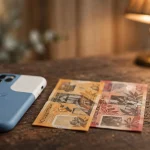
PayID uses a registered phone number or email as an identifier, while the NPP carries transfers between banks.

PayID is an Australian digital payment system built around an identifier, such as a mobile phone number or email address. Instead of relying on those details as the visible payment reference, a transfer can use the registered PayID to identify where the money is to go. The identifier is the handle for the transaction; the transfer itself moves between banks through the payment infrastructure behind it.
That infrastructure is the New Payments Platform (NPP). PayID operates through the NPP, which facilitates quick transfers between banks. The practical distinction is between the detail used to identify a recipient and the network that carries the payment. A mobile number or email address is not itself the money, nor is it a separate bank account. It is the identifier used within the payment system.
The design makes a bank transfer possible without entering the recipient’s traditional account details into every payment form. A PayID is a human-readable alternative for identifying the destination. The NPP provides the underlying connection through which banks can process the transfer. In broad terms, the identifier helps specify the destination, while the platform enables the movement of funds between participating banks.
Choosing an online pokies site for PayID in Australia calls for checking the details that matter to you, such as licensing, deposit minimums and stated payout times. Use these operator notes as a factual reference when considering your options for 2026.
SpinsUp
SpinsUp is licensed by the Curacao Gaming Control Board under OGL/2023/174/0082, with Dama N.V. named in the licence details.
Thor Casino
Thor Casino is licensed in Curacao through Antillephone N.V., with Versus Odds B.V. identified. Its minimum deposit is EUR 20.
Wild Tokyo
Wild Tokyo lists a A$10 minimum deposit and a Curacao licence. Its stated payout times are 30–60 minutes for crypto and 1–5 days for fiat.
Roby Casino
Roby Casino is licensed by Curacao eGaming, with Roby Games Ltd named in its licence details.
Neospin
Neospin is licensed by the Curacao Gaming Control Board under OGL/2023/176/0095, with Hollycorn N.V. named in the licence details.
Uptown Pokies
Uptown Pokies is listed as operating since 2017 and holds a Curacao licence. Its minimum deposit is A$20.
Rollero Casino
Rollero Casino is licensed by the Curacao Gaming Control Board under OGL/2023/176/0095, with Hollycorn N.V. named in the licence details.
7Bit Casino
7Bit Casino is licensed in Curacao and operated by Dama N.V.
Ricky Casino
Ricky Casino lists a A$20 minimum deposit, rising to A$30 to qualify for the bonus. Its stated payout times are under one hour for crypto and 1–3 business days for PayID.
Kingmaker
Kingmaker lists a A$30 minimum deposit. Its stated payout times are about 90 minutes for crypto and 1–5 days for fiat.
PayID transactions are described as instant, and the NPP supports quick transfers. That describes the payment mechanism, not every step surrounding a payment made to a business. A service may have its own processes before it initiates or recognises a transfer, so the speed of the bank-to-bank movement should not be confused with the time taken by a separate service to handle a transaction. The payment rail and the recipient’s procedures are different parts of the overall process.
This distinction matters when the term “online PayID pokies” appears in payment searches. PayID describes a way to transfer funds; it does not describe a game, certify a business, or establish what rules apply to a service receiving money. The presence of a familiar payment option is a statement about payment handling only. It is not evidence of licensing, fairness, or a guarantee about what happens after funds reach a recipient.
There is also a legal boundary specific to Australia. Under the Interactive Gambling Act 2001, operators cannot provide real-money online casino games, including pokies, to people physically located in Australia. PayID’s existence as a payment system does not alter that rule. The payment mechanism and the legality of the service are separate questions, and one cannot be used as proof of the other.
For an ordinary bank transfer, the core sequence is straightforward at a conceptual level: a sender uses a PayID to identify the destination, and the NPP facilitates the transfer between banks. The system is designed to avoid making the recipient’s conventional account details the main identifier presented for a payment. Its purpose is payment routing through an agreed identifier, not the creation of a special balance or a separate account for each transaction.
The words “instant” and “quick” describe the intended movement through the payment network, but they do not answer every question about a particular payment. They do not establish whether a business accepts PayID, whether it has processed a payment, or whether the underlying service is lawful. Those are distinct matters. For Australian readers considering searches for PayID pokies, the distinction is material: PayID explains how a transfer can be identified and carried between banks, not whether a real-money casino service may lawfully be offered in Australia.
A minimum deposit is the amount an operator requires before a balance can be funded. It is separate from the payment method itself: PayID does not determine the casino’s entry threshold. For Australian readers, that distinction sits within a more important legal boundary. Under the Interactive Gambling Act 2001, providing real-money online casino games to people in Australia is prohibited. The figures below describe payment terms reported in the market; they are not an invitation or recommendation to use an offshore gambling service.
Reported minimums for PayID deposits commonly fall between AU$10 and AU$20.
Some operators have been reported as accepting deposits from as low as AU$5.
Reported minimums for PayID deposits commonly fall between AU$10 and AU$20. The exact figure is set by the operator, not by the PayID system. A payment option can therefore be available while the amount required to use it differs from one cashier to another. The label “PayID” answers how a transfer may be made; it does not establish how much an account must receive before the transfer is accepted.
The difference between the lower and upper ends of that range is AU$10. For a person assessing a stated threshold, that is the initial amount needed to meet the deposit condition—not a forecast of what will be spent or lost. A minimum is a gate, not a suggested budget. Depositing the smallest permitted amount does not make real-money play safer, and a larger threshold does not imply better payment terms.
Some operators have been reported as accepting deposits from AU$5. That lower figure comes from a specialist review, so it should be treated as a specific reported term rather than a settled market standard. It does not replace the more common AU$10–AU$20 range, nor does it mean that every PayID cashier will offer the same starting amount. A low figure can be relevant to a comparison of stated conditions, but it is not evidence of legality, fairness, or an operator’s ability or willingness to pay.
The arithmetic is straightforward. A AU$5 threshold is half of AU$10 and one quarter of AU$20. That difference describes the amount required at the point of deposit only. It says nothing about the eventual account balance, the outcome of any game, or whether a player can withdraw funds. Treating a smaller entry amount as a smaller overall financial risk would confuse one transaction condition with the total exposure.
The phrase “PayID pokies” can also blur two separate questions: whether a payment method is offered and what minimum amount applies to it. A cashier may specify a minimum for a particular method, but the payment label alone does not supply that number. Where a threshold is stated, the useful figure is the one attached to PayID in the payment terms—not a general minimum shown for a different method or account action.
A stated minimum should also be read as a condition, not as a promise that a transfer will be accepted in every circumstance. The figure identifies the amount an operator says is needed to initiate a deposit through the relevant route. It does not establish the status of the operator or alter the legal position of real-money online casino services in Australia. PayID availability is a payment detail, not a legal endorsement.
The practical threshold is therefore limited in scope: the reported common starting range is AU$10–AU$20, while a specialist review reports a lower AU$5 entry point in some cases. Those amounts should not be blended into a single universal minimum. The difference matters because a person comparing a published condition needs to distinguish a broadly reported range from an individual low-threshold claim.
No deposit minimum can make a prohibited service lawful. The Interactive Gambling Act 2001 bars operators from supplying real-money casino-style games, including pokies, to people physically located in Australia. The minimum figures above are only descriptions of reported payment conditions, not encouragement to fund an account. A small first transfer remains real money, and the threshold does not change that.
Legal Prohibition
Under the Interactive Gambling Act 2001, operators cannot provide real-money online casino games, including pokies, to people physically located in Australia.
A PayID transfer has two separate cost and timing questions: what the payment rail charges, and what the recipient service adds to its own terms. PayID itself does not charge a transfer fee. Reputable venues also do not add a separate charge for PayID deposits or withdrawals. That makes the payment method’s direct fee component straightforward, but it does not establish that every service using PayID is free of other charges or conditions.
For a deposit, the transfer is typically completed within seconds. This describes movement through the payment system, not the overall quality of a gambling service. A quick transaction does not show that an operator is lawful, financially sound, transparent about its terms or willing to pay a withdrawal. It is a narrow measure of payment speed, not a certificate of reliability.
That distinction matters when assessing claims about the “best” PayID pokies. A payment logo or a promise of fast deposits can make a service appear convenient, but neither tells the whole financial story. A comparison based only on speed and fees leaves out the operator’s status and the rules that apply to the account. Those are separate matters and should not be collapsed into a single rating.
There is also a legal boundary in Australia. Under the Interactive Gambling Act 2001, providing real-money online casino games, including pokies, to people physically located in Australia is illegal for operators. PayID’s availability does not change that rule. Nor does the existence of a payment channel establish that a gambling service is authorised to serve people in Australia. A payment feature is infrastructure; it is not a licence.
For a payment-term assessment, the useful distinction is between the transfer itself and the service’s own terms. The transfer may be completed in seconds and have no PayID fee, while other account conditions remain independent. A claim that a deposit is “instant” should therefore be read as a statement about payment movement, not as a promise that every account step is instantaneous. Likewise, “no PayID fee” does not mean that every transaction-related condition is absent.
A clean comparison would record only what can be separated and checked: whether a PayID transfer fee is stated, whether the stated deposit timing refers to the transfer or a broader process, and whether the payment claim is being used to imply something about the operator. The first two relate to payment terms. The last does not follow from them. Without that separation, a low-cost payment method can be mistaken for evidence that the overall arrangement is low-risk.
The same logic applies to lists and rankings. A list of services advertising PayID may show that the payment method is mentioned, but presence on a list does not establish lawful availability in Australia or make one service safer than another. Ranking by payment speed alone would measure only one narrow feature. Ranking by fees would be similarly incomplete, particularly where PayID itself does not charge a transfer fee and reputable venues do not add one for the transaction.
The practical value of PayID, considered solely as a payment mechanism, is therefore limited but clear: the transfer rail itself does not impose a fee, and casino deposits are typically completed within seconds. Those points describe cost and speed. They do not settle the legality or reliability of a real-money casino service, and they should not be treated as a recommendation to use one. A fast payment can still lead to an unsound decision; the arithmetic is not improved by how quickly it clears.
For an Australian bank transfer using PayID, the identifier supplied for the transaction must be the one registered with the player’s bank. That may be a mobile number or an email address. A different identifier, even one that the player can access, does not meet the matching condition. The relevant comparison is between the PayID entered for the transfer and the PayID recorded by the bank.
This is a bank-side detail, not a question of how a casino labels its payment option. A payment page may display PayID, but that does not change which identifier is registered to the bank account. If the details do not match, the transfer may not proceed as intended. The mismatch should therefore be treated as a payment condition to resolve with the bank, rather than as evidence that the payment method itself is unavailable.
The distinction matters because an identifier can be familiar to its owner without being the identifier registered for PayID. For instance, a person may have more than one email address or mobile number. Only the one formally linked to PayID at the bank satisfies the stated matching requirement. A saved contact, an address used for other payments, or an old number should not be assumed to qualify merely because it belongs to the same person.
Bank restrictions are a separate issue from matching details. A specialist review reports that some Australian banks, including institutions among the Big Four, have at times blocked PayID transfers to gambling merchants identified by the bank, under their acceptable use policies. This is a reported, time-sensitive practice, not a rule that can be applied to every bank or every transfer. The bank’s decision may depend on its current policy and how it classifies the recipient.
That qualification is important. A blocked transfer does not by itself establish that the PayID details were incorrect; equally, correctly matching details do not guarantee that the bank will allow a payment to a particular merchant. These are two different checks: one concerns whether the identifier matches the bank’s registration, and the other concerns whether the bank permits that transaction under its own rules. Treating them as the same problem can send the account holder looking in the wrong place.
The bank’s acceptable use policy governs its own handling of payments. A payment option displayed elsewhere cannot override that policy or compel a bank to process a transfer it has restricted. Nor does a successful transfer establish anything about the recipient beyond the fact that the bank processed that transaction. Payment access is not proof of licensing, fairness, transparency or willingness to pay winnings.
The legal position in Australia also sets a boundary around the subject. Under the Interactive Gambling Act 2001, operators are prohibited from providing real-money online casino games, including pokies, to people physically located in Australia. The payment method does not alter that rule. A transfer route, whether available or blocked, is not a legal approval of the gambling service.
For an account holder, the practical distinction is therefore narrow. The PayID details must correspond to the bank’s registered identifier; a bank may separately restrict a transfer to a gambling merchant. If a payment is declined, the cause cannot safely be inferred from the result alone. The bank is the relevant source for its own registration details and payment policy. A receiving service cannot confirm what identifier the bank has registered or whether the bank will permit a particular transfer.
No blanket statement about Australian banks is justified by a report of occasional restrictions. Policies and classifications can change, and a bank’s treatment of one recipient does not establish its treatment of another. The same applies to the identifier: matching the registered PayID is a necessary detail, but it does not remove a separate bank restriction. Keeping those conditions distinct gives a more accurate account of why a transfer may be unavailable, without mistaking payment access for approval of the underlying service.
A general payment banner is not confirmation that PayID is available for a particular account. A site may mention several payment methods without showing which ones can be used for deposits, withdrawals or both. The relevant check is the cashier’s payment-method list, viewed before account creation where it is accessible.
The cashier should name PayID specifically. A reference to bank transfer, instant payments or local payment options is not enough to establish that PayID is supported. If the method appears only after registration, or the cashier cannot be viewed without opening an account, availability remains unconfirmed. That distinction matters: a broad payment claim describes a service in general; the cashier identifies the options presented to the account holder.
The deposit and withdrawal menus should be treated separately. PayID may be displayed for one transaction direction without being available for the other. The presence of the option also does not establish that every bank will allow a transfer, or that an operator will accept a payment in every circumstance. Bank policies can affect transfers to gambling merchants, so a cashier listing is not a promise that a transaction will succeed.
PayID is a payment method, not evidence of an operator’s licence, fairness, clear terms or willingness to pay winnings. Nor does a label such as “licensed” settle the legal position in Australia. The Interactive Gambling Act 2001 prohibits operators from providing real-money online casino games, including pokies, to people physically located in Australia. A payment option cannot change that restriction.
For anyone assessing payment information rather than seeking a recommendation, the useful record is narrow: whether PayID is explicitly listed, whether it appears under deposits, withdrawals or both, and whether the terms explain any conditions attached to its use. Promotional wording, partnership claims and a general list of payment brands should not substitute for those details. If the cashier does not clearly show PayID, its availability should be treated as unverified, not assumed.
This check does not make an offshore casino service lawful or remove the risks associated with using one. It only establishes what the cashier says about a payment option at that point. A “PayID pokies” label elsewhere on a page is packaging; the cashier is the operational detail, and neither is proof of legal permission in Australia.
A specialist review reports that the daily PayID transfer limit is set by the bank holding the account, not by the payment recipient. For anyone assessing PayID pokies in Australia, that distinction matters: a casino’s payment page cannot determine the maximum amount the bank will allow to leave an account through PayID.
The limit is an account-level control. It applies to PayID transfers made from the relevant bank account, while the casino’s own payment terms are separate. A transfer can therefore be within a site’s stated terms yet still exceed the bank’s permitted daily amount. In that case, the bank’s limit is the constraint; the casino cannot raise it by changing its cashier settings.
The figure should be checked with the bank that holds the account. A general description of PayID, or a payment option displayed by a merchant, does not establish the limit attached to a particular account. Nor does a limit reported for one account establish the limit for another. The bank is the source for the account-specific ceiling and for any applicable conditions.
This also keeps three different numbers from being confused: the bank’s daily transfer cap, the merchant’s minimum payment amount and any withdrawal threshold. They govern different parts of a transaction. The bank-set cap concerns how much may be sent through PayID during the bank’s daily period; it does not define what a merchant will accept or how a later payment will be handled.
A payment arrangement should not be judged by a search label such as “best PayID pokies” or by the mere appearance of PayID in a description. The bank limit says nothing about an operator’s legal status, reliability or payment conduct. It answers a narrower question: what amount the bank will permit from that account through this method.
For a precise figure, the relevant bank’s own account information or support channel is the appropriate reference. Third-party summaries can describe the general arrangement, but they cannot confirm an individual account’s current cap. The account holder’s bank sets that boundary; the recipient does not.
A PayID withdrawal has two separate stages: the casino’s handling of the request and the transfer to the bank after approval. The payment rail does not control the first stage. A request can remain pending inside the casino’s system before any funds are sent.
A specialist review reports that a casino’s pending period may be 24–72 hours. That is an account of reported terms, not a fixed PayID processing rule: the review and release of a withdrawal are controlled by the operator. It also reports that the casino checks withdrawals internally and that timing can depend on the player’s KYC status. If identity or account checks are incomplete, the request may not reach the transfer stage promptly.
Once approved, the bank transfer is a separate interval. The same specialist review places the PayID transfer after approval at 12–24 hours. It gives a total request-to-receipt timeframe of 2–4 days when the internal pending stage is included. Those figures should be read as reported timing, not a guaranteed service deadline for every account or payment request.
The arithmetic explains why a fast bank transfer does not necessarily mean a fast payout. The time spent waiting for casino review comes first; the transfer interval starts only after the operator releases the funds. Looking only at the post-approval estimate leaves out the period that can account for much of the elapsed time.
For any payment arrangement, the relevant terms are the stated review process, the documents required for verification, and the point at which the operator treats a request as approved. A displayed PayID option does not establish how quickly a withdrawal will be reviewed or released.
There is also a legal distinction in Australia: under the Interactive Gambling Act 2001, providing real-money online casino games to people physically located in the country is illegal for operators. The timing figures above describe reported payment stages; they are not an endorsement or assurance that an online casino service is lawful, accessible, or will pay a particular request.
A free-credit offer has a face value, but that figure is not the amount that can necessarily be withdrawn. The controlling term is the wagering requirement: how much qualifying play must be recorded before the credit, or winnings linked to it, becomes eligible for withdrawal. A specialist review reports requirements in the range of 30x–45x the bonus amount. That range is a reported term, not a universal rule.
The calculation is a multiple of the bonus itself. At 30x, the required wagering total is thirty times the credited amount; at 45x, it is forty-five times that amount. The higher multiple creates a larger turnover condition against the same nominal credit. Until the condition is met, the headline value should not be treated as cash available to withdraw. The calculation describes a requirement, not the likelihood of completing it or ending with a balance.
Wagering Calculation
Identify the bonus
Determine the face value of the free-credit offer.
Apply the multiple
Multiply the bonus by the reported requirement (e.g., 30x to 45x).
Determine turnover
Calculate the total qualifying play required before the credit becomes eligible for withdrawal.
The written terms also determine what counts toward wagering and which restrictions apply. A credit may be subject to conditions beyond the multiple, so the number alone does not establish its full value. Where the terms are unclear, the offer cannot be costed reliably. PayID is a payment method; its presence does not verify a credit offer, establish its conditions or make the credit withdrawable.
Searches for free credit linked to PayID, including claims circulating on social platforms or discussion forums, do not replace the offer’s actual terms. Availability should not be inferred from a payment label or a promotional claim. The relevant comparison is between the stated credit and the complete wagering obligation attached to it. Without that calculation, a large displayed amount is packaging; the turnover condition is the measurable liability.
A PayID payment becomes final once it is confirmed. If money is sent to the wrong recipient or for the wrong amount, the transaction cannot be reversed through PayID. That makes the confirmation step a financial control, not a formality.
Before approving a transfer, check the recipient details and the amount displayed by the bank. Compare them with the intended payment information, and stop if anything differs or is unclear. Do not rely on a site’s branding or on PayID being available as proof that the recipient is legitimate. The payment method does not establish an operator’s legal status or guarantee how a transaction will be handled.
This matters when a cashier describes a PayID payment as suitable for pokies. In Australia, the Interactive Gambling Act 2001 prohibits operators from providing real-money online casino games, including pokies, to people physically located in the country. A payment option does not change that legal position. Nor does a completed transfer create a PayID-based right to reverse the payment if the underlying transaction is disputed.
The practical distinction is simple: a payment can be checked before confirmation, but PayID cannot undo it afterwards. Screenshots or transaction records may help document what occurred, but they do not make the transfer reversible. If an instruction appears inconsistent, or the destination cannot be identified clearly, the lower-risk decision is not to confirm it.
Treat any request to send funds as a separate decision from the claims surrounding it. Once confirmed, the money has left under an irreversible instruction; promotional wording cannot supply a cancellation mechanism.
A Facebook post mentioning PayID and pokies is a promotional claim, not confirmation that a payment option is available. The wording may describe a general payment method, a particular operator’s claim, or an offer; those are different things. A post alone cannot establish that PayID appears in a site’s cashier, or that the operator is authorised to provide online casino games in Australia.
PayID is an Australian payment system that moves funds between banks through the New Payments Platform, using an identifier such as a mobile number or email address. That general function does not verify any Facebook page, casino account or advertised promotion. Nor does PayID availability establish that an operator is licensed, that its games are fair, or that it will pay winnings.
Payment availability is checked in the operator’s cashier, where PayID must be shown as an option. This is the relevant place to confirm a payment claim before account creation; social posts are not a substitute for the cashier’s current information. Any advertised terms should also be distinguished from the payment method itself: a mention of PayID does not establish the conditions attached to an offer.
There is a separate legal issue for Australian residents. Under the Interactive Gambling Act 2001, providing real-money online casino games, including pokies, to people in Australia is illegal. A Facebook promotion does not change that position. Payment wording can be checked as a factual claim, but it should not be read as approval of the service being promoted.
Some operators support PayID withdrawals, but that payment option does not make a real-money online casino lawful to offer to people in Australia.
No. Under the Interactive Gambling Act 2001, operators cannot provide real-money online casino games, including pokies, to people physically located in Australia; PayID does not change that.
PayID itself does not charge transfer fees. Some casinos may charge withdrawal fees, so check the venue’s terms before making a transaction.
Reported PayID deposit minimums are commonly A$10–A$20, though some operators have been reported to accept A$5. The minimum is set by the operator, not PayID.
Reported minimums are commonly A$10–A$20, with some operators reported to accept A$5. PayID itself does not set the deposit threshold.
PayID lets you identify a payment recipient using a registered detail such as a mobile number or email, and transfers through the NPP are designed to move quickly between banks. It is a payment method, not a guarantee that a gambling service is lawful.
PayID can be used to transfer money, but it does not make real-money online pokies lawful to provide to people in Australia. Under the Interactive Gambling Act 2001, operators cannot offer those games to people physically located in Australia.